
By Aidan Jones
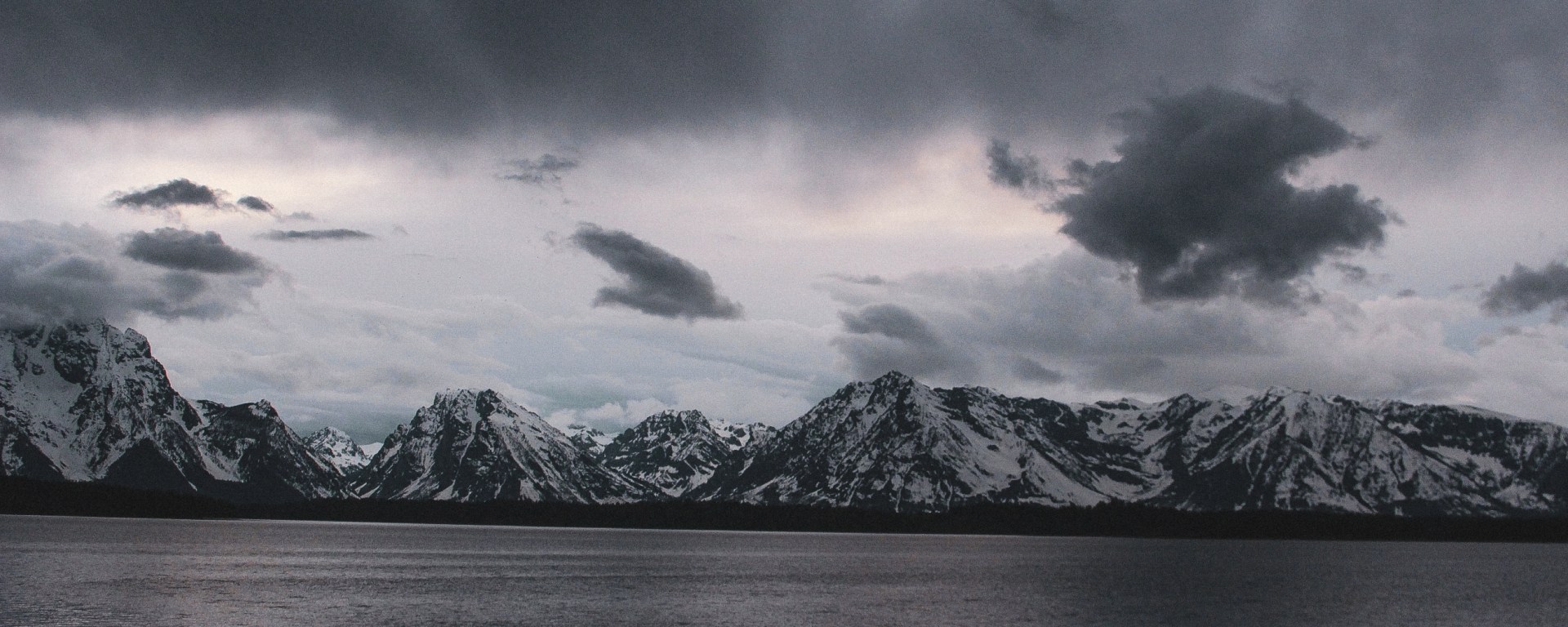
Black clouds gathered over Wawel Hill, twisting like the dragon that, according to popular legend, had once called the hill home. All throughout Krakow, citizens cast worried glances toward the sky, bidding quick goodbyes to their friends as they hurried homeward. Certain there would be no more business that day, the shopkeepers in the Cloth Hall shuttered their booths. Even the old ladies at the pretzel stands lowered their chins and packed up their bags in the face of the impending storm. An early darkness covered the city, a strong wind whipping the waves of the Vistula into a frenzy.
Amidst the gloom of Floriańska street glowed a solitary shop window. Inside, a clockmaker hunched over his desk, fine tuning the tiny gears that peeked from the body of the watch in front of him. Years of meticulous work had lent this old man the same regularity as the clocks that he built and repaired. Tomasz Sikorski hadn’t closed his shop early in 47 years, and he didn’t intend to begin today.
The sky rumbled a warning that sent stray pieces of trash skittering toward St. Florian’s Gate. A small tree branch struck the clockmaker’s window before being swept away by the wind. Sikorski did not look up. He wiped a rheumy eye as he squinted through his jeweler’s loupe, completely immersed in his work. Wrinkled fingers delicately adjusting and re-adjusting the watch components, the old man toiled on mechanically.
When the repair had been completed to his satisfaction, he set down his tools and wound the watch, his brows contracting at the reassuring ticking that began to emanate from the small device. He set to work reassembling the body of the watch and, with a final screw, set it on a shelf alongside other finished products. That finished, he turned his attention toward a cuckoo clock. Ignoring the intricate carvings that covered the clock’s exterior, Sikorski began to dissect it.
Without warning, a cacophony of chimes, bells, and whistles announced the end of the work day. The old man flinched, frowning down at the cuckoo clock before squinting out the window at the dimly-lit street. He had been startled, which was rare. Joints creaking, he locked up his shop, settled his cap on his head, and stepped out into the street.
Floriánska was eerily still. The clouds that swirled overhead seemed to be holding their breath, as if awaiting permission to break upon the city. Sikorski paid no heed to the weather, his eyes on the grey cobblestones at his feet. Only the profound silence of the evening intruded on his plodding thoughts, prompting his years to perk up. Sikorski shivered in spite of the warm air, turned quickly from his door, and shuffled down the street. His footsteps echoed along the cobblestones, ringing loudly in his ears. With a frown, he cocked his greying head to one side. Someone was following him.
Sikorski paused in the middle of the street, his head protruding from his hunched form as he turned to glare back the way he had come. He intended to growl a reproach at whoever dared to follow him. Most people knew better than to bother him, and he had no charity to give to strangers. But the rebuke died on his tongue. The street was empty. Not a soul was in sight. The footsteps continued to plod up the street from St. Florian’s Gate, slowly approaching the old man who stood alone in the road.
Sikorski’s eyes narrowed. He was a practical man, and no one could accuse him of having an active imagination. Nevertheless, he stepped quickly in the direction of the market square, working valiantly to keep his pulse under control as the skin on the back of his neck crawled. As he walked, the awaiting clouds seemed to receive their permission. The sky opened with a crash, and the rain came pouring down.
Lighting split the darkness, illuminating the Mariacky basilica with a flash. The statue of Mickievicz frowned down at the old man as he struggled across the square, head bent against the wind. Sikorski chanced another glance behind him. The following footsteps had disappeared in the roar of the heavy rain, but the old man had a growing suspicion that he was not alone. Looking sharply to his right, he found a figure walking beside him, keeping pace effortlessly.
The following footsteps had disappeared in the roar of the heavy rain, but the old man had a growing suspicion that he was not alone.
“Good day,” the stranger remarked cordially. His face was emotionless, and stood out in pale contrast to the dark square.
“Good day,” Sikorski returned, in a tone that suggested it was anything but. The other man continued to walk silently beside him. Sikorski halted, turning to face the stranger head-on.
“Well?” he snapped. “Can I help you? I’m a busy man.”
“You needn’t be,” the stranger commented, not making eye contact. He was middle-aged and clean shaven. His clothes were dark and formal, as if he had just come from a wedding, or perhaps a funeral. “At least,” he continued. “It needn’t be a problem.”
“Well it is a problem,” Sikorski snarled. Something was off about this other man. “Good day.” He turned to go, but an icy hand gripped his arm, stopping him dead in his tracks.
“Beware, Tomasz Sikorski,” the stranger intoned. His face was pale and terrible, and Sikorski realized that although the rain was coming down in sheets, this man’s clothes were perfectly dry. “Beware,” he repeated, releasing Sikorski’s arm. “You don’t remember me?”
“I do not.” Sikorski raised a numb hand and wiped the water from his face. His cap was soaked through. Squinting, he studied the pale man’s face. A suspicion had begun to gnaw at him. “I don’t owe you money, do I?” he ventured.
The stranger gave a genuine laugh. “My name is Piotr Nowak,” he said. “I delivered your papers and packages for many years. And in all those years, you never once looked me in the eye.”
Sikorski frowned, wracking his memory. “Perhaps you look a bit familiar,” he conceded.
Nowak waved his hand. “That’s no matter. I’m here on a different errand. Now look me in the eyes!” he commanded. The old man glanced away stubbornly, but an icy breath brushed his cheek, and he turned to find Nowak standing uncomfortably close. Sikorski swore and took a step back. Glaring defiantly, he met the stranger’s gaze. Nowak smiled grimly. “What do you think about death?” he asked.
Sikorski twitched at the question, blinking rain out of his eyes and trying to decide if the question was a threat. “We all have to die someday,” he growled with a philosophical shrug.
“But most people actually live first!” Nowak exclaimed angrily. He had suddenly become very animated. “You, on the other hand, have trudged through your life, treating your existence as if it were a chore. Never a kind word for a stranger, never a spark of wonder at the beauty that surrounds you… and there is such beauty!” Nowak towered over the old man, glaring down at him like a vengeful god. “Think of the opportunities you’ve been given! Three of my children died in my arms, while you of all creatures were permitted to live to a ripe old age. Did it ever occur to you that you might be held responsible for how you used that gift?”
Sikorski cowered, but his temper was rising. “Look here,” he snapped. “It seems that you’ve had a hard time of it. But I’m not some starry-eyed adolescent. I can’t spend my days living with my head in the clouds. I’m a realist. I have work to do and bills to pay. To say nothing of taxes!” He glowered up at Nowak, who returned his gaze with sudden pity.
“If you were truly a realist—if you truly lived steeped in Reality—then I would not be speaking with you at all. But as it is, I come to you for your own good, as well as for my own.” The pale face stared down; eyes boring into Sikorski’s soul. “I bore a grudge against you all my life,” Nowak confessed. “I hated you for your success, and despised you for your blindness to the world around you. I stand before you in penance for that sin.” He paused for a moment. “And,” he continued. “I come to you in warning. You will die very soon. You know this to be true.”
Sikorski’s eyes widened. He was suddenly aware of his weak joints, his brittle bones, and the weary beating of his old heart. Was it just his imagination, or did his eyes strain to see the pale man who spoke with him? An icy fear gripped his heart. “I’m not ready,” he stammered.
Nowak’s eyes burned with a blue fire that seemed to almost illuminate his face. “I know. And because of the charity of men you may never meet, a little more time has been granted you. But life is precious, Tomasz. Live it while you can.”
The following footsteps had disappeared in the roar of the heavy rain, but the old man had a growing suspicion that he was not alone.
Thunder roared overhead as lightning lit up the square. Sikorski stood alone. With a shiver, he cautiously glanced around. The wet streets shone, raindrops distressing the water that pooled in the square. Buildings loomed in the darkness, their windows dim and lifeless. The wind had blown out the streetlights. High above, a trumpet played a short pattern of notes from the top of the Mariacky church tower. Sikorski had heard the call a thousand times throughout his life, but tonight he noticed it. Lifting his eyes to the dark tower, the old man watched until the notes abruptly ended, then raised a hand in salute to the unseen trumpeter.
A glimmer of light spilled from the window of the tiny Romanesque church that sat in the corner of the square. St. Wojciech’s. As if seeing it for the first time, Sikorski walked hesitantly toward the church and pushed the door open.
Inside, all was still. A few old women with shawls over their heads sat quietly before the Blessed Sacrament, fiercely gripping worn rosaries. Sikorski awkwardly removed his cap and slipped into the back pew. He shifted uncomfortably. The altar was much too close and there was nowhere to hide. Slowly, he raised his eyes to the golden monstrance, and his gaze locked on the small white host. He stared for a long moment, transfixed. Then the moment passed. With the weight of his long life pressing down on him, the old man lowered his head into his hands and wept.
Gradually, his heart stilled. The rain slowed, drops falling with a gentle plink-plink-plink on the church roof before stopping altogether. The scent of incense and polished wood hung in the air, and a young priest in green vestments appeared in the doorway of the sacristy. It was time for the evening Mass. The candles at the altar flickered, the old ladies knelt, and for the first time in many years, Tomasz Sikorski prayed.
Aidan Jones is a second-year graduate student pursuing a Master of Arts in Classical Education at Hillsdale College. His work has previously appeared in publications including the St. Austin Review, Gilbert magazine, and the Chesterton Review.
Photo by Chloe Noller.

