
Forgotten Heroes: The Polish Catholic Men that Shaped the American Revolution

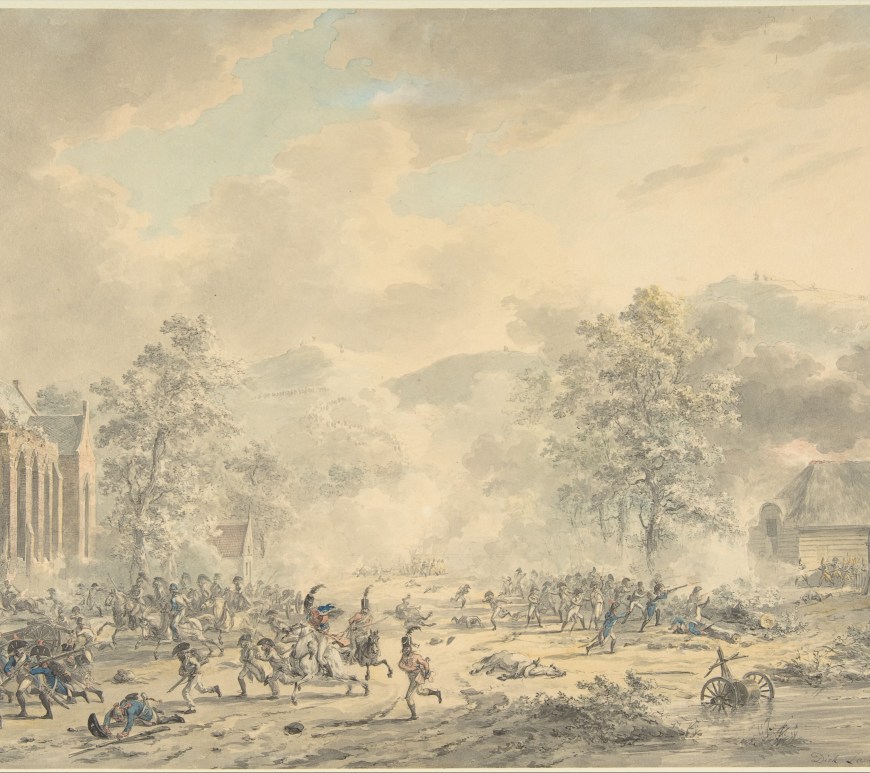
By Frederick Woodward Heroism, by nature, tends toward a tragic dichotomy. All throughout human memory, the pattern has remained relatively fixed. A man attains popular immortality, or else he is forgotten a few generations after he dies. The two conditions are not mutually exclusive — one can precede, or follow the other. Popularized, forgotten, redeemed again — these words sum up the cycle of virtually … Continue reading Forgotten Heroes: The Polish Catholic Men that Shaped the American Revolution

An Interview with Dr. Daniel Kuehler

How do you see music in conversation or in relationship with the liberal arts? Is music part of the liberal arts? I would say a very emphatic yes, because it’s one of the original seven. So if we’ve got the trivium and the quadrivium, the trivium are all of the arts of the word—grammar, logic and rhetoric—and they’re geared towards knowledge of the self, and … Continue reading An Interview with Dr. Daniel Kuehler

Man as Homo-Adorans

By Samuel Hilgeman On the Road to Emmaus, two men walk with God: “And beginning with Moses and all the Prophets, he interpreted to them in all the Scriptures the things concerning Himself… And their eyes were opened, and they recognized Him” (Luke 24). Reason without worship leads to death. In the modern western world, the great skeptics of the human tradition seek to build … Continue reading Man as Homo-Adorans

Letter from the Editor | Issue #51

Dear Reader, I find it ironic how winter, a season of apparent stillness and silence, is often the busiest time of year for students. I’d like to encourage you (through what hopefully is not too cheesy of a letter from the editor) to imitate the season and practice intentional stillness in your days as we approach the end of the semester.  As academics, we spend … Continue reading Letter from the Editor | Issue #51

The Atomic Bombings of Hiroshima and Nagasaki: Dark, Terrible, Wonderful, Righteous Things

Dr. Charles N. Steele Eighty years ago this past August the Japanese Empire was finally defeated. It took over four and a half years of bloody fighting and the ferocious bombing of Japanese cities with incendiaries and atomic bombs to beat them into surrender. It is a great thing that the Japanese Empire was crushed. It was a remarkably brutal regime and it had the … Continue reading The Atomic Bombings of Hiroshima and Nagasaki: Dark, Terrible, Wonderful, Righteous Things

Consent is More Than Voting

By Jacob Schulz Enshrined within the American system of politics is the foundational principle, boldly proclaimed by the Declaration of Independence, that governments “deriv[e] their just powers  from the consent of the governed.” That phrase, however, demands more than a single once-and-for-all expression of consent at the formation of the body politic and government. It also encompasses the right of the people to continually exercise … Continue reading Consent is More Than Voting

Jesus as Healer: An Interview with Dr. Kelly Franklin

What are your thoughts on Jesus as a “Healer”? I guess it’s been on my mind, this facet of the Christian faith, this facet of a fundamental part of Jesus’s identity that the Gospels lay out. I’ve been trying to tell people about miracles more, and the truth is that I have a friend who was crippled, and I’ve seen her run. I saw before … Continue reading Jesus as Healer: An Interview with Dr. Kelly Franklin

The Horror Novel as a Means to Conversion

By Frederick Woodward The horror novel is a unique subset of the fiction genre. In some ways, it can be understood as confronting the whole of reality more directly than many other types of storytelling, for it deals more intimately with the negative constants of our existence: evil, corruption in men, and the perversion of the natural order. The intent here is not to disabuse … Continue reading The Horror Novel as a Means to Conversion