By Caitlin Filep
There are few things that soothe me more during the crush of finals week than going down to one of the stacks in Purgatory and just sitting on the floor among the books. Most times it’s the children’s section for the nostalgia–I’ll often crack open an illustrated Harry Potter or a Percy Jackson book and lose track of time–but sometimes I’ll venture to other genres for variety. Once I found a charming and witty picturebook in the philosophy stacks explaining Sartre’s existentialism (if one may call Sartre “charming”). As a former English major and devourer of books for as long as I can remember, it brings me an inexpressible peace to sit amongst the stories and the essays and the poetry simply for the sake of it. Whether you’re like me and the library is your place of comfort and enjoyment, or if it’s only your midterms study spot, libraries themselves have been somehow essential in forming your college years because they hold our education’s very substance–and perhaps a little magic too.
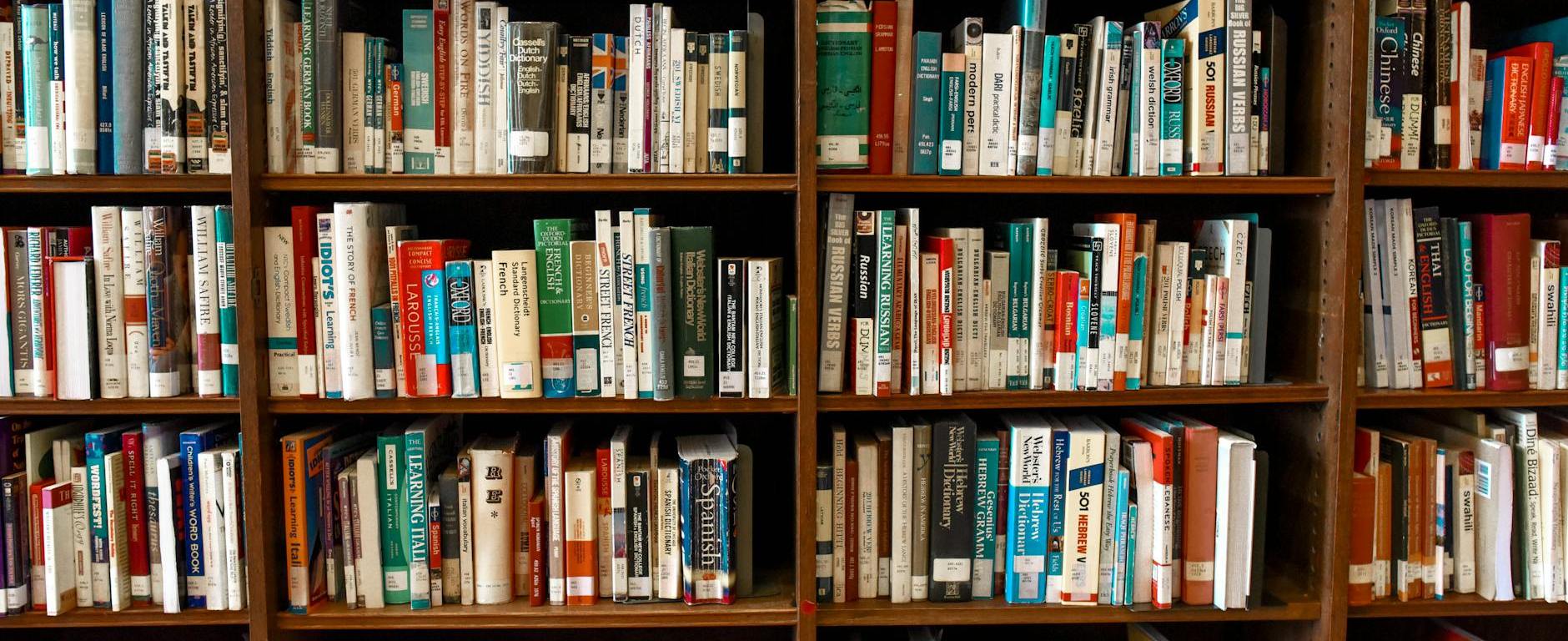
One can imagine my surprise, then, when this summer I decided to explore my local public libraries in Arizona and was met with an entirely different experience. The first library I visited admittedly caters more to the elderly community, but since it was the library where my grandmother had taken me to find a new chapter book every Tuesday that I spent at her house, I thought that’s where I’d begin. At first it looked just the same as I remembered, but as soon as I got into the stacks I was perplexed and disappointed. I was overwhelmed by rows and rows of shelves containing pop fiction for adults as I turned down aisle after aisle expecting the genre to change. Recalling how much I loved to peruse the teen section in middle school, I thought maybe I would find some old favorites there–but I struggled to find any book written earlier than 2015, with queer, race-based, and more explicit books directly at my eye level on most shelves. Since I adore poetry, I attempted to find books from Dickinson or Browning–but instead I found a poetry section that had more books about reading poetry than books of actual poetry. I was completely let down by my last resort: the classic literature section was so small it didn’t even occupy most of a single five-by-eight shelving unit. I was in a library, for goodness’ sake–where were all the books?
I was in a library, for goodness’ sake–where were all the books?
The second try was even worse. My town, Sahuarita, has increased significantly in its population during the last decade, especially in the number of families, so the library I visited was built less than five years ago and is currently considered one of Sahuarita’s newest attractions for school-age children. When I walked into the streamlined, freshly-carpeted lobby, I was met with many of the same letdowns, but with the addition of five fully-stocked video game rooms, more space spent on study tables than on books, and several dismal-looking banks of totally empty shelves. I was hard-pressed to come across more than one book there on any ancient or modern language…in the foreign languages section, which wasn’t more than ten books total. My one fortunate discovery was two volumes of C.S. Lewis–Mere Christianity and Screwtape Letters–in the religion and spirituality section, although I had been hoping to find something like The Weight of Glory so I could take it home. I left without checking out a single book.
Sadly, after becoming frustrated and obsessed with this subject and diving into a research binge, I found that this is not the exception but the rule in most public libraries across America. Though my experiences may sound easy to boil down to the failures of postmodern education and public schooling, this is a genuinely complex situation: it’s easier to give many library patrons online access to books that are now in the public domain (i.e., most of the classics we read at Hillsdale) rather than keep physical copies; libraries don’t have the funding for individual copies of books at each location in a given network; and as public institutions they have to cater to the tastes of their main readership or risk the loss of crucial financial support.
I also had the privilege of speaking to our very own Mr. George Allen, who provided insight into the state of public libraries. “From my experience,” he told me, “what you’ll hear in the profession is that it is not our job to decide what people ‘should’ read. Those who work at public libraries in particular will claim that their job is to select what the public wants and what publishers recommend, and their personal evaluation of whether a book ‘should’ be read or ‘should’ be on the shelves doesn’t come into it.
“This was not always the case,” he continued. “Famously, Anne Carroll Moore, the children’s librarian at the New York Public Library from 1906 to 1941, exercised a great deal of judgement about what she acquired based on what works she did and didn’t personally approve of. She also worked as a hugely influential book reviewer, her literal stamp of approval having a large impact on new books’ success. She kept the NYPL from acquiring Goodnight Moon, which she despised, and in fact the NYPL didn’t carry a copy until 1972, twenty-five years after it was first published. My impression is that Moore was not an isolated case, and librarians generally used to embrace their role as selectors and trend-setters, evaluating literature on its merits and promoting what they thought best to their communities.
“These days I think most librarians try to distance themselves from their responsibility of selection. They might say their selection decisions are based on community demand, or the publishing industry’s recommendations, or their ‘collection development policy.’ But the fact is that you can’t buy every book that’s published. You’re always deciding what is and isn’t worth your money–or, more accurately, the taxpayer’s money. Behind every ‘policy’ there is a person making decisions. There’s no getting away from the role of individual judgement, and there’s no hiding from your responsibility for your choices.”
Mrs. Maurine McCourry, our library director, also shared her thoughts on the development of the librarian’s profession from the early nineties up to the present, specifically its movement from a “‘give them what they need’” to a “‘give them what they want’” approach. “We were maturing as a profession, essentially, and continue to evolve,” McCourry described. “The current discussions in the profession have to do with ‘neutrality’ in both the provision of services and the building of collections. As George says, we can’t collect everything, and judgments do have to be made. Librarians have to make choices based on the needs of their communities. At Mossey, we base those choices on the College’s Mission. We purchase materials and provide services that support the curriculum and the work of the faculty and staff in fulfilling that Mission. The guiding principle at each library is slightly different, but the bottom line is service to the community. Neutrality, or suspension of bias, in selection of materials is a worthy goal in that service, but in reality, is not always possible.”
Mr. Allen and Mrs. McCourry’s observations add another layer of complexity to an already multifaceted issue: libraries’ book stocks are governed by individual persons, and these individuals have the uncontested authority to choose what may populate the intellectual lives of the American public. Taste is not something we must be handed without question, but something which can be cultivated slowly, from the ground up. Aside from hoping for more classically educated librarians who love the Great Books, perhaps it may become our goal to reform public taste by advocating for the perennial works of humanity to be physically present in our own local libraries. Hoping for a better culture will get us nowhere, but doing what we can to see beloved titles and authors represented in our hometowns just might accomplish something.
Now, why should you even care about this? Simply put, you should care because you’re likely a Hillsdale student who has been irrevocably influenced by libraries, whether you appreciate that fact or not. Even more importantly, you live here in America, a country that has been indelibly formed by men and women who were themselves raised by libraries. Frederick Douglass, a self-taught learner and lover of libraries, said that “knowledge is the pathway from slavery to freedom.” Mark Twain educated himself in the evenings at public libraries from the age of eleven onwards. Though forbidden from reading fiction by her mother, Charlotte Perkins Gilman visited her public library frequently and read literature, history, and physics books long before she became an author. Alexander Hamilton learned much at a young age from his library of only 34 books, enough to make him an avid reader before the age of fifteen. Ray Bradbury, perhaps one of the most prescient, impactful, and original writers of the last century, said this regarding his education: “Libraries raised me. I don’t believe in colleges and universities. I believe in libraries because most students don’t have any money. When I graduated from high school, it was during the Depression and we had no money. I couldn’t go to college, so I went to the library three days a week for 10 years.” These are the thinkers and storytellers who molded our nation’s culture in each of their respective generations, and they could not have thought or written as they did without libraries. If the books we make available to our citizens do not encourage them to think well, to know truth, and to love beauty, then why are we surprised that our culture has turned away from the values that matter most? Further, if we claim to love these values, then why aren’t we impassioned enough to make truly good literature accessible to those who may never set foot on a college campus?
These are the thinkers and storytellers who molded our nation’s culture in each of their respective generations, and they could not have thought or written as they did without libraries.
Lest I sound like an intellectual elitist and American idealist, there can be merit and value in many of the popular fiction works on the shelves of public libraries, and they often present worthy subjects for pleasure reading. But after an education at Hillsdale, one has to ask: how many of these books, taking up the majority of a library’s space and funding, are going to be remembered in 15 years? 50? 100? Are we really supposed to be catering solely to the majority taste when in many cases that has outstripped the great classic novels? Are public libraries supposed to house what is genuinely good, or just what people like? These are not questions which may be answered easily, but they deserve to be wrestled with, not least by a Hillsdale College student who is about to enter the field of education and the larger climate of America. If we truly love these books because of our debt to them, then we should love them enough to fight for their importance–not only for our own sake, but for every single person who hasn’t read them yet.
Caitlin Filep (‘25) is a graduate student in her first year of the Masters of Classical Education (MACE) program. Please don’t come and steal her spot on the floor of the children’s section in Purg after reading this article.
 Hillsdale Forum