Poetic Creation: Illuminating the Mystery of Divine Love

Love is the colossal mystery at the heart of the universe—a mystery that haunts every corner of our lives as we ponder what we see around us. It is the light illuminating the nothingness within the atom and the chorus singing through the darkness between the stars. We often have a utilitarian view of nature, with horses for riding, trees for building and burning, and … Continue reading Poetic Creation: Illuminating the Mystery of Divine Love

Cowboy Poetry

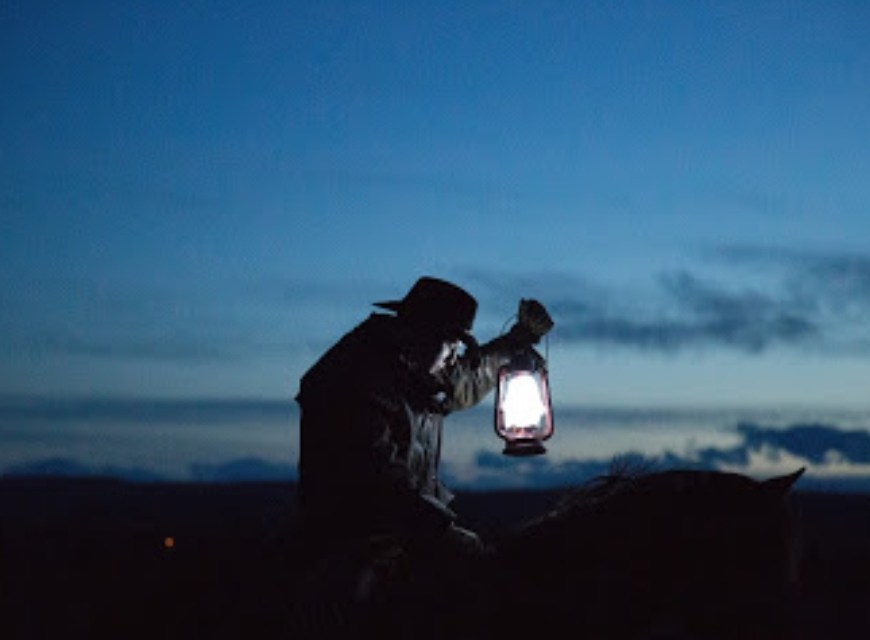
Have you ever heard of Henry Herbert Knibbs? Or cowboy poetry? Or a chuckwagon cook? I hadn’t either. At least not until I met John and Randy, who are cowboys. Actual cowboys, as in leather chaps, frisky horses, and open spaces.   The marvelous thing about poetry is that it bursts out of every seam of human experience. Look to the Wild West. Their poetic tradition—heart-wrenching, … Continue reading Cowboy Poetry

Gregory Alan Isakov and Rainer Maria Rilke on the Quiet Things of Life

“ Oh blessed rage for order…The maker’s rage to order words of the sea…”   ~ Wallace Stevens One of Augustine of Hippo’s ways of understanding the human heart sounds paradoxical at first: a man can walk around the earth, but he cannot ever circumscribe his own heart. Rather than debate whether or not this is the case, I am going to take this as … Continue reading Gregory Alan Isakov and Rainer Maria Rilke on the Quiet Things of Life

The Risky Business of Loving

And now I’m terrified of loving ‘Coz I’m terrified of pain And of missing out on human things By cowering away ~ (Gang of Youths, Go Farther In Lightness, “Fear and Trembling”) I stumbled across these lyrics over Christmas break and was immediately struck by the struggle expressed here and its relevance to the human condition. Here the singer, David Le’aupepe, vocalizes his deep fear … Continue reading The Risky Business of Loving

To Conquer a Virus and Unweave a Rainbow

When the recent coronavirus shut-in hit, and the Michigan governor’s stay-at-home order forced its way through my phone by emergency text message, I took one last fleeting look at my campus office bookshelf for any last-minute tome I might bring with me as I escaped to the safety of my country estate. For a moment that old copy of Boethius’ Consolation of Philosophy looked like … Continue reading To Conquer a Virus and Unweave a Rainbow

Things Below: Thoughts on the World and Literature, Part Two of Two

Continued from last issue. O’Connor’s sense of the fantastic nature and Rev. Ames’ wonder at the lovely particularity of creation are, in my experience, unusual among Christians. In fact, it’s rare among people anywhere, no matter their religious perspective. This general inattentiveness to nature’s quiet glories draws the attention of Emerson, for instance, in his book Nature, where, regarding the stars, he writes, “Seen in … Continue reading Things Below: Thoughts on the World and Literature, Part Two of Two

Things Below: Thoughts on the World and Literature, Part One of Two

When on July 15, 1838, Ralph Waldo Emerson addressed the graduating class of Harvard Divinity School, he didn’t open his remarks as one would expect, by quoting a passage of scripture.  The young men to whom he spoke were, after all, seminarians who had spent their time at Harvard studying the Bible and preparing for a career in the ministry.  We’d assume that the speaker … Continue reading Things Below: Thoughts on the World and Literature, Part One of Two

“Milestones of Earth Residence”: On Poetry of Place

When I drive home from Hillsdale, I turn the radio to 93.9 as I pass Ann Arbor. It’s just close enough for the signal to come through, and for the rest of the way back to Detroit, I listen to the sound of my teenage years and my college summer commutes. Broadcasting from across the river, the Canadian station plays alt-rock hits until they wear … Continue reading “Milestones of Earth Residence”: On Poetry of Place

“The Riddle We Can Guess”: On Clarity and Ambiguity in Writing

“The riddle we can guess / We speedily despise.” —Emily Dickinson, #1222 I was lying in the backseat of the car on an early October day in 2014, waiting while my mom grabbed a few things from the grocery store. It was probably very hot, as Tennessee autumns tend to be, but all I can recall about that moment was the book, William Faulkner’s The Sound and … Continue reading “The Riddle We Can Guess”: On Clarity and Ambiguity in Writing

Caroling with Scrooge

It’s the most wonderful time of the year. Come December (or November, or October—there’s no accounting for taste), when our townspeople begin to erect, not only trees and lights, but monstrous, inflatable snow globes; when entire radio stations change over to non-stop holiday music, oppressive with a surfeit of sleigh bells; when our august retail institutions flood the market with plastic consumer goods designed to … Continue reading Caroling with Scrooge