We All Have an Agrarian Purpose

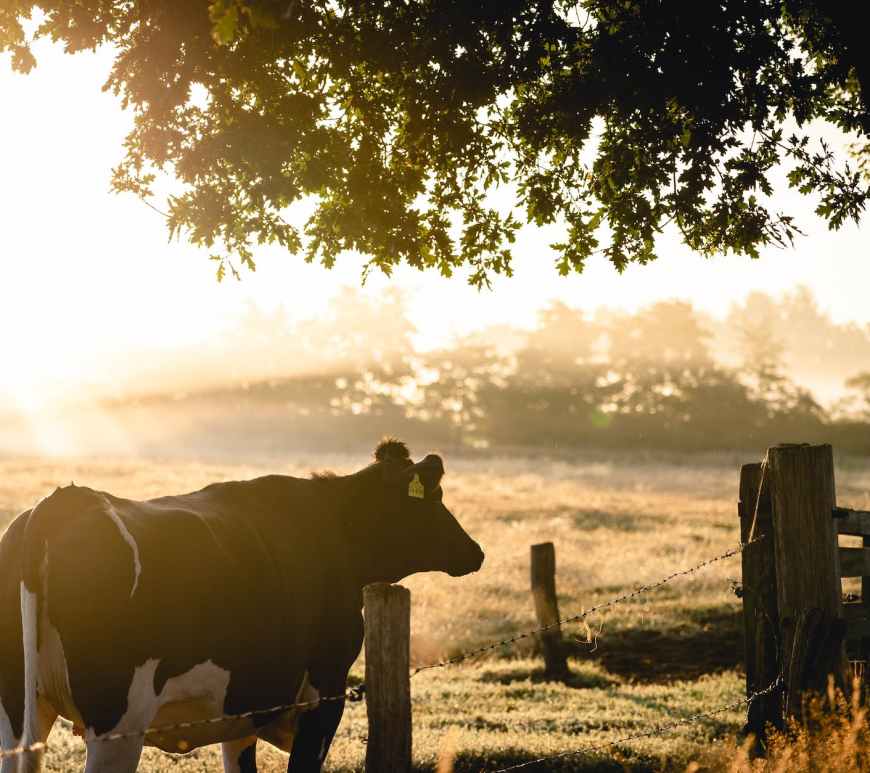
For most modern Americans, the idea of agrarian living is woefully antiquated. With supercomputers in our pockets and self-driving tractors in the fields, picking up a shovel to plant vegetables seems like unnecessary work. Supply chain issues and global catastrophes notwithstanding, why worry about growing food when Kroger’s shelves are fully stocked and Walmart is always open? This attitude towards food production reveals the fractured … Continue reading We All Have an Agrarian Purpose

To Feel and to Hold: Touch as a Love Language

“‘Put your hand under my thigh, and I will make you swear by the Lord, the God of heaven and the God of earth…’” (Genesis 24:2, NAB). This is one of those verses where even the Christians have to ask: “Did Abraham really say that?” In fact, he did, and he meant it. Modern Americans keep a bipolar relationship with physical touch. On the one … Continue reading To Feel and to Hold: Touch as a Love Language

The Problem of Christian Philosophy

God is not an answer to the enigma of being; He, veiled and hidden, tenuous to the human eye, is wrapped in its center In a 1935 series of lectures, Martin Heidegger asserts that Christian philosophy is a contradiction in terms. If philosophy—especially metaphysics—is the exploration of the fundamental question “Why is there being rather than nothing?”, then religion, and dogmatic religion in particular, cannot … Continue reading The Problem of Christian Philosophy

Suffering Redeemed: Work as an Act of Love

While it is true that manual labor has an inherent value, to focus primarily on the meaning of the activity and ignore the way that activity is experienced largely misses the point I have heard many different philosophical explanations for the value of hard work and the dignity of America’s working class. They offer a response to those among the upper and upper- middle classes … Continue reading Suffering Redeemed: Work as an Act of Love

The Risky Business of Loving

And now I’m terrified of loving ‘Coz I’m terrified of pain And of missing out on human things By cowering away ~ (Gang of Youths, Go Farther In Lightness, “Fear and Trembling”) I stumbled across these lyrics over Christmas break and was immediately struck by the struggle expressed here and its relevance to the human condition. Here the singer, David Le’aupepe, vocalizes his deep fear … Continue reading The Risky Business of Loving

Between Earth and Sky: The Physicality of Intellectual and Spiritual Growth

I went wilderness canoe camping for the first time the summer after my tenth birthday; it is family tradition to mark this birthday with a trek to the Boundary Waters Canoe Area Wilderness on the northern border of Minnesota. Since that trip, I’ve been up there a handful of times, most recently this last July. My experience in the Boundary Waters resonated with a question … Continue reading Between Earth and Sky: The Physicality of Intellectual and Spiritual Growth

Christ the Gardener: Reflections on a Summer in Turkey

“Now Mary stood outside the tomb crying. As she wept, she bent over to look into the tomb and saw two angels in white, seated where Jesus’ body had been, one at the head and the other at the foot. They asked her, “Woman, why are you crying?” “They have taken my Lord away,” she said, “and I don’t know where they have put him.” … Continue reading Christ the Gardener: Reflections on a Summer in Turkey

Le Point Vierge: The Problem of Pilgrimage

“Przszedłeś jako ciekawy turysta, odchodź jako bogaty pielgrzym”     This inscription can be found on a plain wooden post at the base of the mountain Giewont in Zakopane, Poland. It glares at the traveler as he walks down the winding dirt path to the small hut that once served as the hermitage of Brother Albert Chmielowski. As one whose knowledge of the Polish language consists of … Continue reading Le Point Vierge: The Problem of Pilgrimage

“A God That Can Dance”: Nietzsche and the Logos

In the beginning was the Word, and the Word was with God, and the Word was God. He was in the beginning with God. All things were made through him, and without him was not any thing made that was made. —John 1:1 In his magnum opus, Thus Spoke Zarathustra, Friedrich Nietzsche proclaimed that he “would only believe in a god who could dance.” Nietzsche … Continue reading “A God That Can Dance”: Nietzsche and the Logos

The World Is Fair, in Spite of the Old Fall

This past July on a warm summer afternoon, I attended a family friends’ poetry night—a classy little shindig with hors d’oeuvres, heels, sophisticated people, and, of course, poetry. A few months later, one of these poems unexpectedly resurfaced in a conversation with a friend. It was a poem entitled “A Fair World Tho’ a Fallen” by Christina Georgina Rossetti: You tell me that the world … Continue reading The World Is Fair, in Spite of the Old Fall