Letter from the Editor, December 2016

We face two facts of life during December: Christmas is upon us and we are tired. We will soon return to family in other cities and other states, communities that did not delight in or endure the same things that we did this fall. There may be a sense of dissonance. Maybe this is not everyone’s experience, but sometimes I find it is mine. When … Continue reading Letter from the Editor, December 2016

Death Declared, Life Questioned: Peter Gizzi Resurrects the Lyric Poem

By Hannah Niemeier Poet Peter Gizzi doesn’t like language any more than a geologist likes dirt; sometimes it gets in the way of his meaning. But what he finds beneath the dust of worn-out words is always precious: It was a language to eat the sky a language to say goodbye   standing with others standing in the dust.   The old language continues its … Continue reading Death Declared, Life Questioned: Peter Gizzi Resurrects the Lyric Poem

The Bedrock of Israel: Churches and Sacred Places in Israel

It’s been nearly a year since my trip to Israel, and I am still trying to process it. Maybe it’s because the trip was wedged between two hectic and difficult semesters. Maybe it’s because I had no idea what to expect, especially since the only knowledge of Israel I had to bring with me on the trip came from the Bible. Or maybe it’s because … Continue reading The Bedrock of Israel: Churches and Sacred Places in Israel

There and Back Again: A Student’s Tale

Hillsdale is not the real world–but it can teach us how to live there. By Madeline Johnson The trip from home to college or back is a sort of trauma, the trauma of dying in one world and being born into another. In the portal between the worlds, that single moment of death and birth, you are utterly alone, the unaccountable soul that counts as … Continue reading There and Back Again: A Student’s Tale

Friendship in the Face of Separation and Death

By Amelia Stieren On Sunday afternoon last August, a car hit 21-year-old Vinny Kurtz while he was riding his bike in the small college town of Marion, Indiana.  In critical condition, he was airlifted by helicopter to a hospital in Fort Wayne where doctors removed part of his skull to alleviate swelling and attempted to amend his collapsed lung. Vinny did not live past the … Continue reading Friendship in the Face of Separation and Death

Letter from the Editor, October 2016

By Chandler Ryd During the past four summers, I have worked as a gardener. I pulled weeds, cut grass, planted flowers, trimmed bushes, and raked leaves, and as I worked, I listened to audiobooks on Spotify. I fell in love with Hamlet, Don Quixiote, and The Adventures of Huckleberry Finn, and heard from G.K. Chesterton, Langston Hughes, and Jane Austen. Through those peaceful, meditative summers, … Continue reading Letter from the Editor, October 2016

Stranger Things and the Return to Faerie: A Contemporary Recovery of the Moral Imagination

By Grace Marie Link “Whoa, whoa, whoa, whoa. That’s not it, is it?” After watching the eight-episode television series, viewers will relate to Dustin’s lament at the end of the beautiful, exciting, and inspiring Stranger Things. The series includes all the necessary ingredients for a successful television show: skilled cinematography,  intriguing plot, killer soundtrack, and nuanced characters played by top-notch actors. It brings the viewer … Continue reading Stranger Things and the Return to Faerie: A Contemporary Recovery of the Moral Imagination

Where Have all the Heroes Gone?

By Katie Davenport “Good guys are boring. They do the right thing all the time. But bad guys, you never know what they’re going to do.” The preceding quote is from director David Ayer, explaining what drew him to the concept of his latest movie, Suicide Squad. Mr. Ayer’s words, though they apply to fictional characters, embody an important aspect of American pop-culture. As a … Continue reading Where Have all the Heroes Gone?

Human Waste and Radiant: Why We Need Contemporary Art

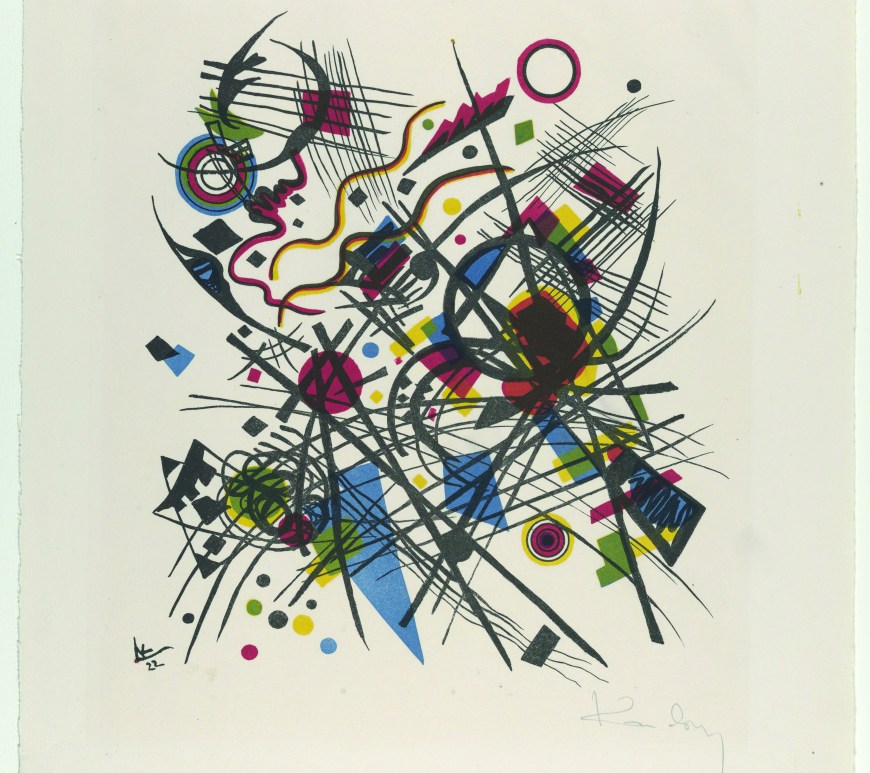
CREATION Art polarizes. Modern and contemporary art have become entwined with with numerous issues of identity and value, such as one’s political leanings. The well-known Political Compass Test asks test-takers to affirm or deny that “Abstract art that doesn’t represent anything shouldn’t be considered art at all.” Like it or not, the conservative-in-stereotype opts, quite vocally, to skip the wing of the museum that holds … Continue reading Human Waste and Radiant: Why We Need Contemporary Art