
By Samuel Hilgeman
On the Road to Emmaus, two men walk with God: “And beginning with Moses and all the Prophets, he interpreted to them in all the Scriptures the things concerning Himself… And their eyes were opened, and they recognized Him” (Luke 24).
Reason without worship leads to death. In the modern western world, the great skeptics of the human tradition seek to build our replacement, exchanging bones and sinews with micro-chips and wires. The rise of AI is a frightening fact for the western world, which believes that man is primarily homo-sapien and fails to anchor man’s definition further than his mental capabilities. The west believes man is primarily a thinking being—an animal separated from the rest of the animal kingdom by its ability to reason. The modern world, a world with AI, forces the question of identity to the forefront of our minds, revealing that reason might not be as scarce a commodity as we formerly thought. There are other things that will be and are able to process information far more efficiently than we can. Whether or not AI is capable of thought (or reason) is not necessarily the point, although I tend to think it isn’t capable of those qualities. The point is, modernity has no grounded view of man’s ontology because they don’t know what the purpose of reason, thought, or human nature is. Modern man simply can’t answer the question of what it means to be human or even what it means to know. He is easily tricked by the illusions of technology to believe that his place in the cosmos might be supplanted by the rise of AI or any other higher agency. I think the problem stems from the very definition we give ourselves in the west: homo-sapien. Betrayed in this definition is the idea that man, at his core, is a thinking creature. But this is not a correct understanding of man; at least, it does not speak to the primary difference of man, only a secondary one.
Man, at his core, is homo-adorans. Worshiping man. He is a being who longs for things, desires to worship, loves, cares, seeks God, seeks to become God. At his core, the arrow of man’s heart points toward God, though it often misses. Thus he worships because he desires. He wants communion, and he will search for it any way he can. The great mystery of man is that he is a cosmic creature, containing the whole cosmos in his being. The unfolding of this mystical secret is found in the first chapters of Genesis. In the beginning of Genesis, man is made from the dust of the earth on the 6th day; a clue that he is far more than just dirt. Contained in the first few chapters of Genesis are the great mysteries of man’s role in the material world. Man is made after everything else is created. He is made out of matter just as the rocks are, but he is also living just as the plants are, and he moves and perceives the universe through sense perception just as the animals do. Thus, he symbolically represents the whole of the created world. Man towers above the animals and extends beyond the material plane because he also has an intellect like the heavenly spirits: the soaring angels, the principalities, the cherubim and seraphim, six winged, many eyed! He is dust and spirit, uniquely positioned in the creation narrative as the connection and union between heaven and earth. And so he represents both heaven and earth in himself—the entire ontology of the world is contained in man. He is the anchor of the cosmos, a mediator between heaven and earth, uniting heaven and earth in his very person. But with this cosmic duty comes a cosmic hunger. Man, being made in the image of God and representing the whole of the cosmos, desires what only God can fulfill.
The great mystery of man is that he is a cosmic creature, containing the whole cosmos in his being.
The tragedy of man is that he desires those things which cannot satisfy, which only leave him empty, which cannot fulfill the cosmic hunger that he has for God. We feel the brunt of this cosmic burden from the very beginning of man’s fall. The glimmers of it appeared in the glint of the fruit as a newly formed hand reached for forbidden knowledge. Our failure in the garden was that we wanted to know more than we wanted to be obedient. If it was true that we were primarily beings who reason, who think, then this act would have made us more human. We would have become better homo-sapiens. Instead, we are beings who desire, to consume, to worship. Yet, we failed to fast and we fell. We prioritized our reason (the ability to know good and evil) over our communion and worship (walking with God, obedience to God). But knowing good and evil only made us hungrier. The tragedy of this fall cannot be overstated. We deal with it in intimate ways, in our nation, family, and hearts. War, famine, cancer, addiction. We are broken creatures, hungry creatures, hoping to eat and be satisfied, but no food satisfies our cosmic lust. In a world such as this, how is it that God mends this hungry world?
The tragedy of man is that he desires those things which cannot satisfy, which only leave him empty, which cannot fulfill the cosmic hunger that he has for God.
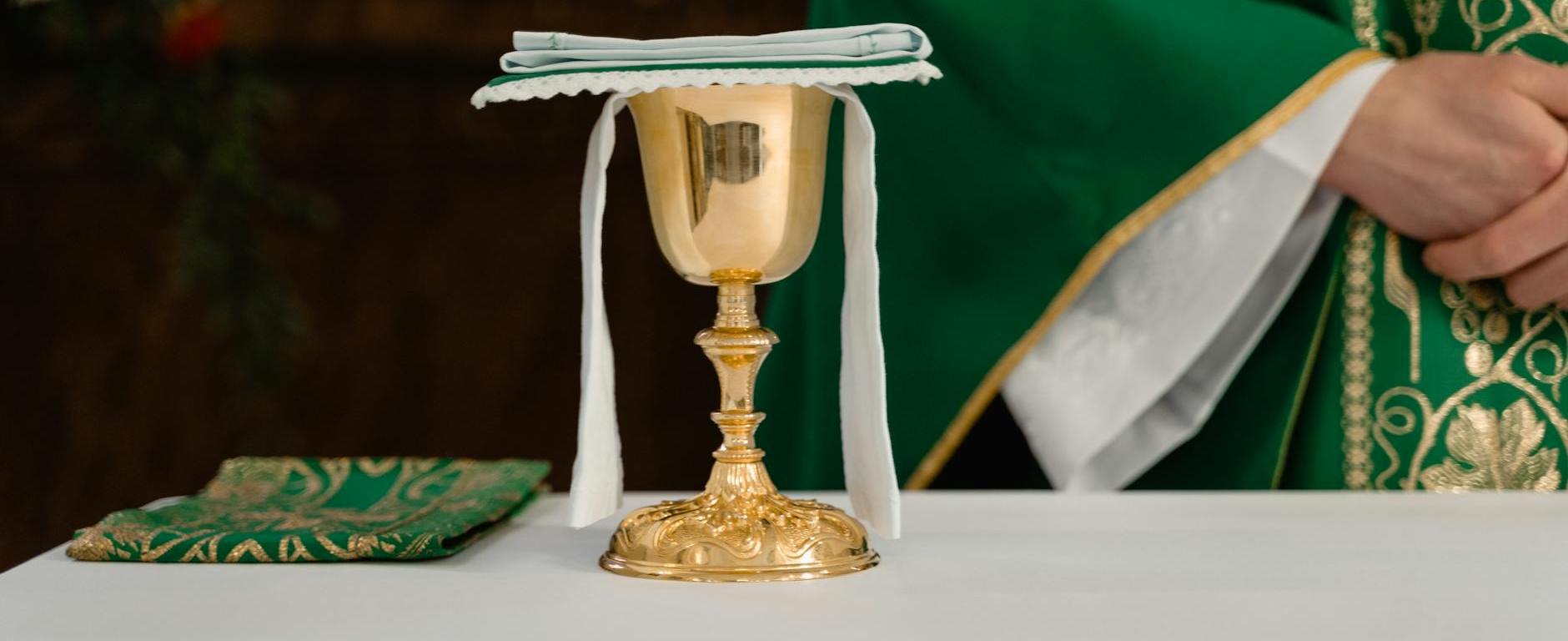
If we return to our cosmic constitution, to the reality that we are unique creatures in the cosmos because we unite heaven and earth together in our personhood, then the riddle is answered. We are homo-adorans (worshiping man), and we are matter and spirit. For this reason, we are priests of matter, taking the things of this world and offering them back to God in one continual act of blessing. We see this throughout the scriptures. Man is always offering sacrifices to God. He is always taking the first born of his flock, his most prized possessions, wine, bread, and anything else that he can offer to God. The entirety of Israeli life is connected to this primordial institution of sacrifice and is the means for Israel’s unique closeness to God. Man takes the things of this earth and offers them to heaven. Israel’s ritual offering becomes their means of atonement and renewed relationship with God, but this doesn’t stop with the Israelites. It continues to today. Nowhere is this better seen than in the Eucharistic act where God and man synergistically unite the whole cosmos in one beautiful unity of love. God begins this act by offering man wheat and grapes. We, thankful to God, create bread and wine from His gift and offer it back to Him at the altar table. God takes the bread and wine, turns it into His body and blood, and offers it back to us to eat, so that we might become the church. We eat His body and blood and are transformed, and then we offer this transformed life back to God. This beautiful rhythm is preserved every Sunday in most Christian worship communities.
We are priests of matter, taking the things of this world and offering them back to God in one continual act of blessing.
At this point, I must admit that I kept something from you when I began this essay, but I did it on purpose. On the Road to Emmaus, it is true that Christ interpreted the scriptures to Luke and Cleopas, but they did not immediately recognize him. One would imagine that being God, His interpretation was not only true but also quite eloquent; one might even say… reasonable. Yet the scriptures say that they still did not recognize that Christ was walking with them because they didn’t know Christ was in their midst. No amount of reason, no amount of thought, even when that reason and thought was offered by God, actually clued them in on who walked beside them. Mysteriously, it wasn’t until “he was at table with them, [that] he took the bread and blessed and broke it and gave it to them where their eyes were opened, and they recognized him.” (Luke 24:30-31) Reason alone was not enough for man to see God, to know Him, to find that ultimate object of desire which man’s heart longs for. No, man must eat with God, must share in His life, must share and eat a meal with God before he knows God. This is no doubt a Eucharistic moment, but it is also a moment where Christ is the priest of matter, offering His bread and body to us. Christ as true man is also true priest. Thus, man’s unique role–to take the things of this earth, the matter, the material, the bread and the wine, and offer them to God is the very means by which he sees God and knows Him.
If reason alone was all we were, all we needed, all that made us distinct from the animals, how is it that we cannot even recognize Christ (the true man) until we eat the bread of heaven? No–our worship, our communion, our priestly duty, is the very means by which we know our creator and thus fulfills our teleological aim. We are man, and man is the creature who unites heaven and earth as a priest, and, through fulfilling this duty, sees and knows God. He doesn’t reason to God. Reason, without worship, without priestly action, without communion, without a shared meal, leaves man separated from God—leaves man with a half chewed fruit and the knowledge that this world really sucks. The man who goes beyond reason to his core identity, to his Eucharstic meal, leaves satisfied because it is here, where God unites Himself to the material of this world, where God takes on body, that man shares in the life of God and thus becomes like God. Reason alone keeps us wondering who the man is who walks beside us on the Road to Emmaus. Worship, communion, and priestly union reveals that He is Christ—the God who walked with us in the garden.
Samuel Hilgeman is a junior studying English.
 Hillsdale Forum