
by Anna Bromm
Jedidiah Vesper awoke but did not open his eyes.
Jedidiah Vesper awoke but did not open his eyes.
He was lying on hard cobbles, and a faint breeze carried the smell of meat and bread and the sound of raucous laughter. He forced his lids open, rubbing the sleep from them, and sat up. Across the cobblestone road, a few men looked suspiciously at him and said something in another language, then hurried off down the street.
It was dark and chilly, and he pulled his ragged jacket closer around his shoulders. This was somewhere in Italy, he guessed, judging by the street signs. Not that he spoke a lick of Italian, but that was what the words looked like. And of course, he didn’t have any euros – just American money.
Jedidiah shifted around on the cobbles and made himself comfortable. With no money and no clear idea of where to go, there was nothing to do but wait.
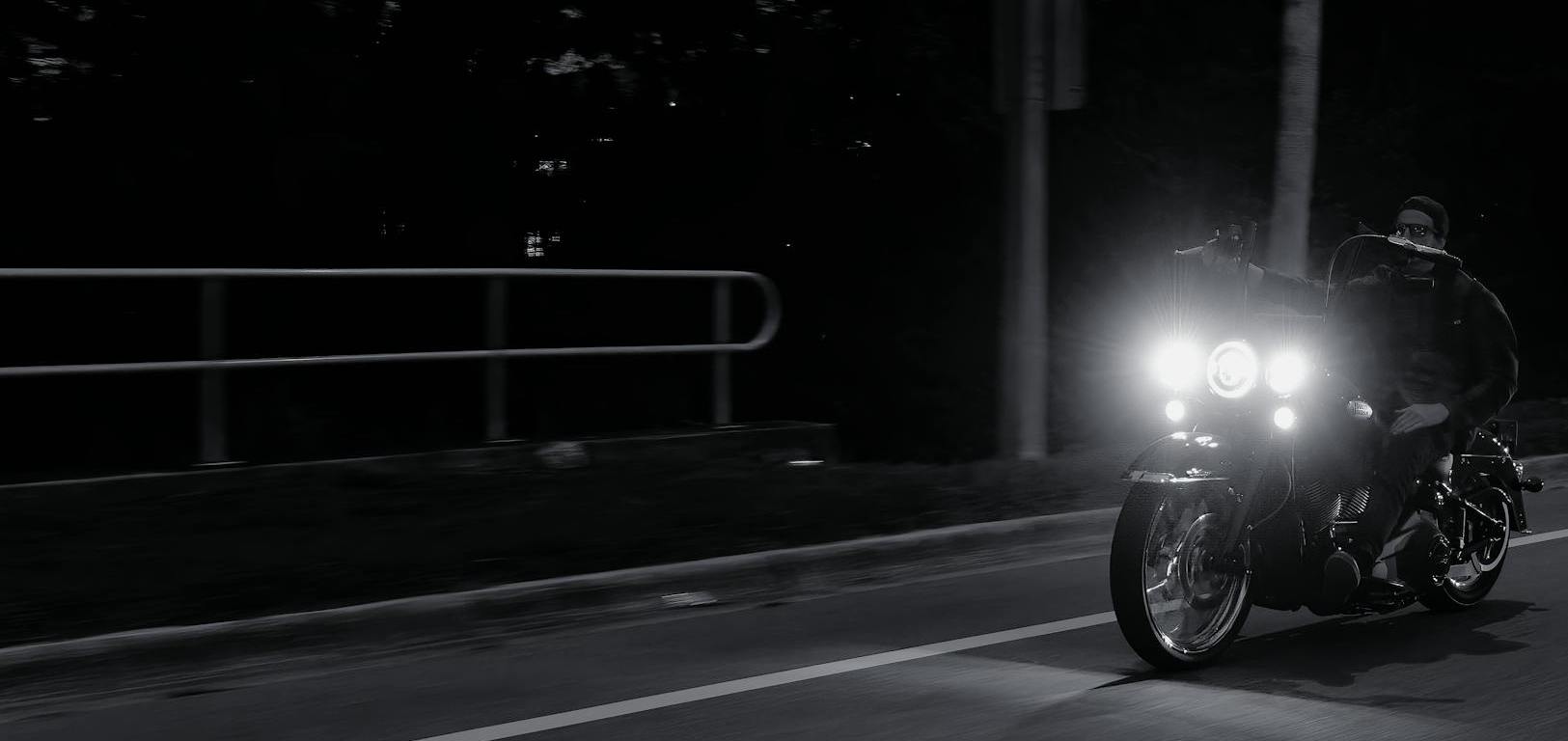
It didn’t take long. A few minutes later, a motorcycle screamed around the corner, bouncing on the cobblestones.
“Watch it!” Jedidiah called.
But it was too late. The driver tried to make the turn and flipped himself over. The motorcycle fell on top of him, the wheels still spinning. For a moment, the alley resounded with the crash of metal on stone, and then everything faded into silence.
Jed heaved himself upright with a grunt and made his way slowly toward the motorcycle.
The sleek, black bike had fallen squarely on the rider’s midsection, and from what Jedidiah could see, it had done more than enough damage. He didn’t dare lift the bike, so he went around and sat by the rider’s head. The man was breathing hard and tried to sit up at his approach.
“Nope,” Jedidiah said. He didn’t try to sound comforting. It didn’t matter–this guy had minutes at best. “Don’t move or you’ll make it worse.”
The rider tried to reach the chin strap of the helmet, but his hand fell limply back.
Jed sighed. “Fine.”
He undid the strap and slid off the full-face helmet. And then he cursed. A young woman was staring up at him; a young woman with dark hair and eyes and blood foaming on her lips.
“I can’t,” Jedidiah blurted out. “I’m sorry, but I can’t.”
He jumped up and sprinted away, but a strong wind knocked him flat on his back. Jed crashed to the ground and lay there, gasping for breath as the stars looked down on the little alley.
“I’ve done enough,” he screamed. “Not this too.”
He began crawling away, but the wind knocked him down again, and he cracked his head on the cobblestones. For a moment, darkness settled over his eyes, and he thought maybe he would lose consciousness and not have to sit next to her until her last breath rattled in her throat and her eyes turned glassy. But then his vision cleared, and it was just him and a dying woman with eyes like Mandy’s.
Jed dragged himself to his knees and crawled back to her, blood from his head wound mixing with tears in his mouth. The woman was still there, her eyes fixed on the stars. He sat down beside in the wreckage and took her hand. She looked at him and tried to speak, but he couldn’t.
Every time, he always felt like he should offer something insightful–some encouraging words to speed the lonely on their journey. And every time, he stayed silent, because what was there to say?
So he sat there on the cold stone street and held the girl’s hand until her breath rattled away and her eyes turned glassy. Then he slid her eyes shut and stumbled off down the street.
He found the source of the laughter and good smells and shoved his way inside. It was a little hole-in-the-wall restaurant, packed with people dancing to songs that had been popular when he was young.
Jed elbowed his way to the bar, ignoring the glares and worried looks he received, and grabbed the first bottle he could get a hold of–some kind of gin–and paid for it with a wad of cash from his wallet, ignoring the fact that it was the wrong currency. Then he went out onto the curb.
It felt like watching people die should have gotten easier. But not even eighteen years, seven months, and four days had taken away the pain. Apparently nothing could–but alcohol was the closest thing he could find to a substitute.
It felt like watching people die should have gotten easier. But not even eighteen years, seven months, and four days had taken away the pain.
He tilted his head back until he could see the cold pricks of the stars and drank the gin until his eyes grew heavy and darkness came.
Jedidiah Vesper awoke but did not open his eyes.
He was sprawled on his back on hard-packed earth that bristled–probably a field left with nothing but stubble. A cold breeze wafted over him, and his nose tingled with the smell of gasoline. Nearby, he heard the rumble of cars, probably drivers in the middle of nowhere, trying their hardest to get somewhere.
No blinding light pierced his eyelids, so, slowly, he cracked them open and gazed up at a hazy sky. The sun was completely hidden by clouds, so he couldn’t tell the time of day. He rose to his feet in the corn stubble–he couldn’t let the drivers on the highway think he was dead–and began stumbling toward the road. His knees were weak and his heart pounded, but he always felt like that on waking up. His headache was gone and the taste of alcohol had left his mouth, leaving only morning breath.
That was about the only perk of this half-life: no matter how much he drank, he never got a hangover.
Why, he wasn’t exactly sure. He still aged, or at least he felt and looked older. But as far as he could tell, sickness, injury, and death were not allowed. So no matter what he did, he couldn’t incapacitate himself badly enough to get out of doing his job.
And no matter what he did, he could never free himself of this living death. He’d given up trying that a long time ago. Better to drink and, for a little while, forget.
A few minutes’ walk brought him to the highway, and from there, he continued until he found the nearest exit. The sign said he was headed toward Willow Creek, which could’ve been anywhere. From the flat land and the corn, it was probably the midwest, but what did it really matter? The last time he’d been around here, he’d sat with a semi-truck driver who’d fishtailed off of I-80 in a blizzard. The time before that might’ve been the boy with cancer. Or the girl in the hospital, whose smile had reminded him of Mandy.
Jed shook off the memories that threatened to overwhelm him. He should remember them all–no one else had been there, which was why he’d been sent. But he couldn’t bear to.
Jed reached the tiny town a few minutes later–it was just a strip of ramshackle houses, crowned by a graffitied gas station with one pump and a small diner. A group of teens was huddled around the pump, and he eyed them half-heartedly. None of them looked like they should be in hospice, but if there was one thing he’d learned, it was that you never could tell. It would just happen sometimes, that was all. Everyone went to the same place in the end. Even he probably would, if the wind ever decided that he’d completed his penance and could live a normal life–or die a normal death.
And if ever that happened, he’d count it a mercy.
Jedidiah entered the diner, welcomed by the tinkling bell above the door. The inside looked like the fifties gone to seed. The black and white linoleum was so sticky that every step made a sucking sound, and the floor was patched all over with different colors of duct tape. A middle-aged man with a beer gut was behind the counter, and a young guy with a backwards trucker hat was drinking a beer in a nearby booth while reading a thick book. Two more books were stacked by his elbow, and Jed could see the library barcodes on their spines.
“Cheeseburger, fries, and a coke,” he told the beer gut and paid with whatever cash he had left over.
It took everything but a couple of pennies and a nickel, and though the man looked meaningfully at the tip jar, Jed stashed the coins back in his empty wallet. Waste not, want not. Especially when your only steady occupation was attending deathbeds.
He swung up onto a barstool and sipped his coke. When the food came, he ate it. The meal tasted like grease with a hint of meat and potato, but with enough ketchup, it was palatable. The whole place was dead silent except for a synthesized beat from the radio.
Was this where he was supposed to be?
Jed finished the food and tossed his garbage, but as soon as he turned toward the door, a warm breeze brushed through his hair.
“Really?” he whispered. He didn’t actually need to speak aloud, but it was somehow comforting. “Even the gas station would be better than this dive.”
The warmth whispered across his skin once more, then disappeared, but the message was clear: wait and see.
He sat down on the barstool and spun around once before planting his elbows on the tacky counter. At least this couldn’t be worse than last night.
“Mind if I smoke?”
The man shrugged, so Jed lit a cigarette and took a big drag of it. The kid in the booth stopped nursing his drink and looked up.
“Dude, lend me the lighter?”
Jed tossed it to him. The kid didn’t look sick. But the lamp over the table looked pretty rickety–that could do some damage if it fell on his backwards hat. Or old Beer gut–he was wheezing a bit as he wiped down tables. He could go into cardiac arrest. That would be preferable to a ceiling collapse–less messy.
“Heads up.”
He barely snagged the lighter as the kid tossed it back. The guy had a strong arm, too strong for an invalid.
“You’re not from here,” the kid said.
Jed just shrugged, but the breeze curled around his hand. Fine, fine, he thought. But it’s not right. It’s like playing with food before you eat it.
Or really, like playing with someone else’s food. He never got a say.
“What clued you in?” he asked.
The kid shrugged and looked down into the dregs of his beer. “Strangers stand out. Nothing ever changes.”
“You’re preaching to the choir on that one.”
Jed popped his spine–it was still stiff from waking up on the hard earth. His body still complained about all this through aches and pains, but his soul? That’d been sanded down to nothing a long time ago.
He puffed out a cloud of smoke and watched it drift away. How long? he asked. The breeze didn’t answer. And how could it, when he didn’t even know what he was asking? How long until this kid bit the dust? How long until he had sat by enough lonely deathbeds and got to lie down on his own?
“You look familiar,” the kid said slowly.
Jed snorted. “That’s highly unlikely.”
If anything, the kid did remind him a little of Mandy–he had dark eyes, just like the motorcycle girl had had. And he would even have Mandy’s dimpled smile, if he ever did smile. Right now, the kid’s mouth seemed permanently creased in a thoughtful expression somewhere between anger and resignation: an expression that felt as familiar to Jed as his old jacket.
The kid drained the last few drops of his beer and tossed the bottle across the restaurant. It arched smoothly over the counter and crashed into the trash can. The man flinched, but just grunted.
“Sorry, Andy,” the kid said. “Just destroying the evidence.”
“That’s the last time,” Andy told him.
The kid rested his elbows on the table. “And don’t I know it. But thanks.”
Jed looked back and forth between the two of them, trying to follow the conversation. “You heading out of town?” he asked the kid.
Maybe he wasn’t who Jed was here for after all. The thought filled him with more relief than seemed merited. But then, it was always harder when it was someone young, like Mandy. Someone with life left to live.
The kid shrugged. “I guess.”
He started fidgeting with his cap, turning it forwards and backwards again and finally twisting it in his hands.
“You travel a lot?” he asked finally.
“Yep,” Jed said. “No home to speak of.”
“Good life?”
“Wouldn’t recommend. I’d take a steady job and a bed any day.”
The kid jammed the cap back on his head, still backwards. There was a defiant tilt to his jaw. “ Guess I’ll have to deal anyway. Any tips?”
Jed sat down across from him. “Don’t do it.”
“Not much else to do. No place in town’ll have me–say they don’t need me, but I know what that means–and I have to leave.”
Andy snorted and slammed down a napkin dispenser.
“At least someone’s unhappy about that,” the kid said.
Jed leaned his elbows on the table. “Parents kicking you out?”
The kid snorted. “Not my real ones, anyway.”
“Just in it for the money?”
“You bet. I’m worth 500 bucks a month today, and nothing tomorrow. So I’ve got to start doing something. Doesn’t matter much what.”
Jed frowned. “No relatives?”
“None I know. Mom was sick when she had me. And then she passed. And my dad wasn’t in the picture.”
Jed swallowed, and his mouth tasted like grease mixed with bile. If Mandy had been pregnant, their kid would’ve been about this age.
The kid stared off into space for a while, then shrugged. “It’s not so bad. I’ll find something to do–something to be.”
Jedidiah studied the kid’s straight features and firm eyes, then nodded. “You will, I’d bet. You have that look about you.”
That is, if he didn’t die first.
Jed strained his senses for the wind, hoping for a sign of what to do, but the air was completely still. People said, no news is good news, but that was stupid. All that meant was now he had no idea whether this kid would live or die. And no idea why it mattered to him.
The kid held out a hand. “I’m Eli.”
Jed shook across the table. “I’m Jed.”
The kid grinned, and the expression lit up his whole face. Jed had been right about that smile. “Care for a game of pool?”
It was dusk by the time Jed realized how much time he’d spent in the diner’s backroom with Eli, pushing balls and drinking cokes. They’d talked little and mostly focused on the game. Eli was good–really good. Almost as good as Jed was.
Finally, Eli rocketed his last ball away and grinned in victory. “Take that, old man.”
Jed shook his head. “Guess I’m losing my touch.”
He didn’t tell Eli that he’d let him win. The loss was worth it to watch him having so much fun.
“Want to go again?” Eli asked.
Jed looked out the window at the setting sun. “I really shouldn’t.”
“All right then,” Eli said, racking their cues. “Thanks for the game.”
They shook hands, and Eli walked out of the diner. To Jed’s surprise, the wind didn’t nudge him to follow. So he curled up in one of the booths, ignoring the hunger pangs in his stomach. Andy kept an eye on him, but didn’t try to kick him out, at least not yet. If this was where he was supposed to be, he would wait. And, in the meantime, he could rest.
Before he knew it, his eyes slid closed, and he dreamt about a young woman with dark eyes and a pain-ravaged face who clung to his hand as she begged him not to go. But he pulled free and ran away, weeping. As he sprinted through the door and down a white hall, the sterile walls melted, and now he saw Eli, lying under the motorcycle and bleeding out, and he looked up at him with eyes like Mandy’s. Jed tried to run away, but the wind knocked him down and darkness closed in.
Jedidiah Vesper awoke but did not open his eyes.
He was flat on his stomach on rough concrete, and he felt as if gravel was pressed into his forehead. Somewhere nearby, a door swung open, and a woman screamed.
He jerked upright and promptly tumbled down several steps. He lay groaning at the bottom as a pair of heels marched down after him.
“If you want food,” a woman screeched, “you’d better go along to the church. We can’t help you!”
Jed rubbed his eyes and looked around. For a moment, his vision was still fuzzy, and he couldn’t figure out why the street looked familiar. But then realization hit–it was Willow Creek. He was sitting on the tiny street that ran through town. In front and behind him were the blocks of rundown houses. He could hear the distant rumble of the highway, and, down the street, he could see the diner and the gas station.
For the first time in eighteen years, he’d fallen asleep and woken up in the same place.
And no one was dead.
For a moment, he couldn’t breathe. Was the curse broken? Was he free?
The woman nudged him with a pointy toe. “Are you deaf? Get off my curb!”
Jed stumbled to his feet and looked at her. She was probably in her late thirties, and would’ve been pretty if she hadn’t been wearing too much cheap makeup.
“Not ‘get off my lawn’?” Jed shot back. “Oh, right. I guess you don’t have a lawn–just a concrete step.”
She glared at him. “If you’re not homeless, are you the social worker? If you’re looking for the kid, you’re too late. He doesn’t live here anymore.”
Jed blinked. Was that why he’d been sent here? “Do you foster Eli?”
“We did.” She snorted. “And much good it did us–that kid was more trouble than he was worth.”
Jed forced himself to breathe deeply. “Is he dead?”
It didn’t make sense–he should’ve been there. But why else would she be talking about him in the past tense?
She rolled her eyes. “Not unless he’s died in the last hour and a half. But that’s not my business anymore.”
Jed clenched his fists. “You just kicked him out as soon as he wasn’t worth it?”
“I’ve got my own kids,” she snapped. “I’ve got a life! I can’t just drop everything and hold his hand forever.”
She spoke of Eli so angrily, and yet it was hard to imagine the kid he’d played pool with, who seemed so resigned to making his own way, causing her trouble.
“Was he a bad kid?” Jed asked.
The woman’s face softened almost imperceptibly. “He always did his own thing. But never a complaint. He left this morning without me having to even ask.”
“Which way did he go?”
The woman gestured down the street, towards the diner. “That way. But you’ll never catch up to -”
Before she could finish, a siren blared, and an ambulance turned the corner, screaming down the street in the direction she was pointing.
Jed sprinted after the ambulance, ignoring his newly-formed bruises from falling down the steps. He couldn’t keep up, but he followed the sirens and ended up in the diner parking lot.
He skidded to a halt next to the ambulance. As he fought to catch his breath, two paramedics emerged from the diner, carrying Eli on a stretcher.
“What happened?” Jed demanded. “Where are you taking him?”
It was stupid of him to care. What was one more death, even if it was a kid he’d played pool with for an afternoon? But he’d never thought he’d spend a moment of life with someone again–a moment where the other person wasn’t on their way out. Something about that game–about Eli–had awoken something in him he’d thought was dead. But maybe it would be better if he buried it again. Life–or what he had of it–was already bad enough. He couldn’t watch someone that he cared about die.
The paramedics motioned him back, but Andy shambled out to stand next to him.
“Don’t know what happened,” he mumbled. “He’d just stopped in to say goodbye. He didn’t look so good–all pale and shaky, you know? I figured it was just nerves. But then he collapsed on the counter. But he’ll be okay, though. They’ll fix him right up.”
Jed swallowed. All of those symptoms–they sounded like Mandy. And no one had been able to fix her.
They carried Eli into the ambulance and shut the doors. Jed considered asking if he could come too, but then turned his back on the vehicle as it pulled away with a screech of tires. The siren’s wail faded into the distance. He was here for one purpose, and chasing after some sick, homeless kid was not a part of it. Although what was his purpose now, if the curse was potentially broken? Where would he go, now that he was free? If he was free. This all seemed too sudden–too random. After all this time, was the wind just going to let him go?
He looked toward the restaurant, and for some reason, all he could think about was the way Eli had smiled after he’d won at pool.
You should go after him, Mandy’s voice whispered. His imagination, but still, it felt so real. He has no one–you should be with him.
If there was one thing Jed had practiced for the last eighteen years of his life, it was sitting with someone who was dying alone.
He should go.
Jed closed his eyes, and in the darkness, he swallowed a sob. He should go. But even after all this time, he still couldn’t.
He turned back to Andy. “Do you know where I could get a car or something? I need to get out of here. Now.”
He had to get away–away from the restaurant and Eli and away from everything he still wasn’t able to face.
“There’s my truck,” Andy said. He cleared his throat like he was trying to cough away a sob. “Eli didn’t have his license, but I used to let him drive it around the parking lot. He named it Long John Silver, after the color.”
“He liked to read?” Jed asked. He didn’t want to know about Eli–knowing always made it hurt more–but he couldn’t help asking.
Andy chuckled. “You could hardly get him to stop. I think he read about everything in the library. It didn’t matter what it was–stories, science, history. You name it, and Eli has probably read about it. His favorite books were ones about traveling and foreign parts.” Andy swallowed, and Jed could see the tears forming in his eyes. “He always wanted to go to Italy and ride a Vespa. He used to joke about that, about how it sounded like his name.”
A Vespa? Jed swallowed, and when he spoke, his voice shook. “What was his name?”
“Elijah,” Andy said. “Elijah Vesper.”
Jedidiah shuddered, and his breeze whisked over his arms, icing them over with gooseflesh.
“Vesper?” he blurted.
Andy nodded. “I think it was his dad’s surname.”
The whole world spun around until he could see nothing but a kaleidoscope of color. Jed stumbled, and Andy grabbed his arm.
“You okay?”
Eli had Mandy’s eyes and smile. This kid in the backwards hat who loved pool and had no home and loved to read was his. And he was sick–maybe dying–like Mandy.
Jedidiah wrapped his arms around himself. “If you don’t mind, I’ll take the truck,” he said, his voice shaking. “I need to get out of here.”
He braced himself, waiting for the wind to knock him over, but the air stayed calm. Whatever the reason he’d been brought here, whatever the reason he’d been granted a day without a death, the wind wasn’t going to say. But apparently, it also wasn’t going to force him into a decision.
Whatever Jedidiah did this time, he would do it because he chose it.
Just as he’d chosen to leave Mandy.
“Where do you want to go?” Andy asked. “I can drive you.”
“Anywhere,” Jed forced out. “Anywhere but here.”
In a few minutes, they were speeding along the highway. Jed stared out the windshield and watched the yellow pavement markings fly by.
He remembered another day, when he’d burst out of the hospital and jumped into the car, then just started driving. He’d driven for days, just heading west. And it was then that the wind had first come to him.
Don’t leave me. Please. We need you.
He’d never understood, in the times he let himself think about it, what she’d meant by ‘we.’
He’d never understood, in the times he let himself think about it, what she’d meant by ‘we.’
The face of Eli’s caretaker sprang unbidden to his mind, and he could see the thin line of her lips and a glint in her eyes that could’ve been anger or tears or both.
I’ve got a life. I can’t just drop everything and hold his hand forever.
That was what he’d thought too. More than that–he hadn’t been able to bear it. And in return, he had received his fill of death.
It was completely possible that if he walked away, he would be free; free to go about his life without the curse. Free to try to forget.
Exit sign after exit sign slipped by, and he stared at them without reading the names.
It was one thing to ease the passing of a stranger. It was another to hold the hand of your dying son.
Was this the reason for everything? For his curse? He’d thought that he’d been doomed to this life as a penance. And maybe he had. But maybe all those years–all those deaths–had prepared him for this moment.
He closed his eyes and let his memories of Mandy flood over him like a nightmare. He heard her cries again, and they ripped at his heart until he almost sobbed with the pain.
He had missed his chance. He could never go back to her and sit with her and hold her hand until she slipped away.
But he could do that for Eli. For their son.
In the darkness behind his eyelids, something inside him awoke.
And Jedidiah Vesper opened his eyes.
“Turn around,” he told Andy. “I need to get to the hospital.”
Everything was eerily familiar as Jed followed a nurse down the hallway and into the elevators. Even the sharp scent of bleach had memories clawing at the edges of his brain. He had to force himself to breathe as the doors closed behind him and the elevator shot upward.
“Are you okay, sir?” the nurse asked.
Jed fisted his hands to keep them from trembling. “I’m fine. It doesn’t matter.”
The doors whooshed open, and she led him down another long, white hall. The only sounds were machines beeping and doctors and nurses whispering.
When they reached Eli’s door, the nurse stopped him. “Wait out here,” she said. “I’ll make sure he can see you.”
She went inside, and Jedidiah caught a quick glimpse of blinking machines and plastic tubes. His stomach heaved, and he bit his tongue to counter the nausea. A lot of things changed in eighteen years, but not this feeling.
The nurse reemerged. “He’s doing okay right now,” she said quietly.
“Will he be okay?”
The nurse put a comforting hand on his arm. “I wish I could say yes. He’ll be with us for a while though. Maybe even a couple of months.”
Jed swallowed. That had been Mandy’s prognosis too. He’d expected it, but that didn’t make it easier to bear. “Does he know?”
She nodded. “He’s struggling. But I’m sure it will help to have someone with him who cares.”
She left him standing in front of Eli’s door and hurried off down the hall. Now, that was a job he wouldn’t envy. So much suffering, and all you could do was help those you could, as fast as you could, because there was no time to comfort them all.
Mandy, be with me.
Jed took a deep breath and opened the door.
Eli looked up when he came in. He was propped up in bed and had an IV in one arm as well as a bunch of other cords and tubes stuck all over him. For a moment, Jed’s vision fuzzed, and he felt like he was back in that other hospital room, looking down at Mandy before he bolted out the door.
Then he blinked, and it was Eli again, grinning feebly as he caught sight of him. He had the Bible open on his lap.
“What are you doing here?” Eli asked. “How did you know I was sick?”
Jed sat down next to him. What was he supposed to do with his hands? He settled on twisting them in his lap.
“I saw the ambulance,” he explained. “And then I talked to Andy, and he told me about you. Specifically, about your name.”
Eli frowned. “What do you mean, about my name?”
Jed took a deep breath and let it out again. Somehow, he missed the wind’s nudges, as comforting as they’d been maddening.
“My last name,” Jedidiah said slowly, “is Vesper. And eighteen years ago, my wife was sick just like you, and she died. I wasn’t there–I didn’t know that she had a son. That she had…. you.”
“Are you saying….” Eli trailed off, his expression somewhere between amazement and anger. “If that’s true, why weren’t you there?”
He looked down at his son, and as he did, his breeze finally brushed over his hand, filling him with warmth. “I promise, I won’t ever leave you alone.”
Jedidiah rested a tentative hand on his shoulder, and to his relief, Eli didn’t push him away. “I have a lot to explain,” he said quietly. “And a lot to apologize for. But I want you to know–no matter what happens with this, whether you get better or not, I’ll be here.” He looked down at his son, and as he did, his breeze finally brushed over his hand, filling him with warmth. “I promise, I won’t ever leave you alone.”
Anna Bromm is an English major.
 Hillsdale Forum