
by Megan Li
In the fall of 1996, my high school literature teacher Mr. Stephen Rippon befriended the woman who would become his wife.
“ [She] mentioned Shakespeare, and I came across as just kind of lukewarm about Shakespeare, so that did not impress her,” Mr. Rippon laughed, “because she really likes Shakespeare.”
Ironically, he went on to teach literature at Delaware Valley Classical School, where he has since incorporated many of Shakespeare’s works into his curriculum. “Shakespeare was more of a taste that I had to cultivate,” he said reflectively. I can certainly agree with him—Shakespeare is a taste I am still working to cultivate.
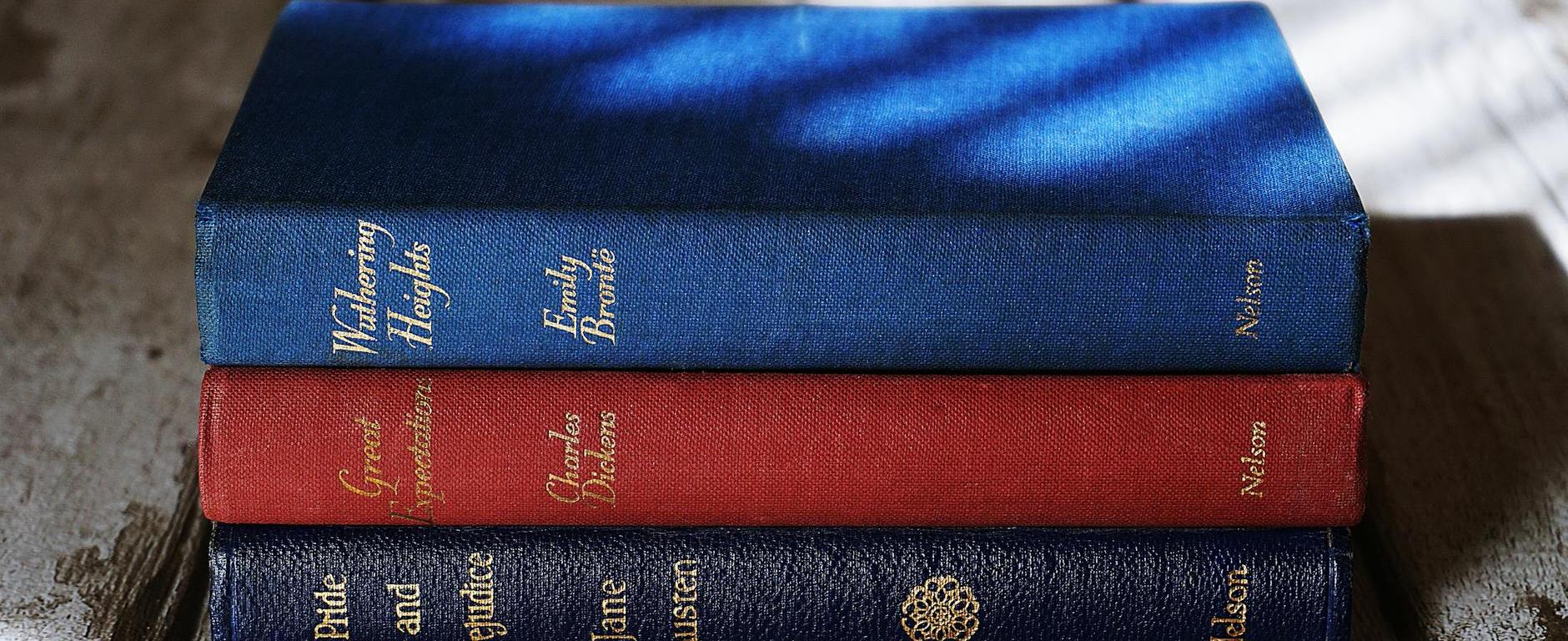
A year later, Mr. Rippon took a class on Jane Austen’s works at the University of Delaware. “One thing that the novels showed me,” he recalled, “is that it’s important not to just judge people based on [first impressions] . . . Elizabeth and Mr. Darcy didn’t really like each other at first,” Mr. Rippon explained, referencing Austen’s Pride and Prejudice. “[But] sometimes you’ve just got to give things time and let things develop, and then they’ll grow into something beautiful, and that was how it was for Elizabeth and Mr. Darcy.”
He added that he saw that idea reflected in his blossoming friendship with his future wife. “While we were never antagonistic, we were just friends; but then over time, it grew into something more.”
The age-old idea that art imitates nature became clear to me in this conversation with Mr. Rippon. Through the exploration of the meandering, beautiful progression of the relationship between two people, the genre of romance can teach anyone about love, and, in doing so, about life. Mr. Rippon told me, “Romance shows us there’s different types of possibilities” and “maybe helps us be more imaginative in our thinking about possibilities.”
Many readers, myself included, enjoy finding such exciting possibilities, at least vicariously, in the romance novel. Penguin Random House, the giant publishing company, reported that their romance sales went up by 50% in 2021, an increase that may come hand-in-hand with the stressful circumstances of COVID. My friend Abigail Stone, a reader and self-proclaimed hopeless romantic, speculated on the cause of this phenomenon: “[Romance] fills . . . the void of that loneliness that sometimes you experience when you’re not in a physical romantic relationship. . . . It’s a way that people can long for and experience [romance] second-hand,” she said, “because it’s in our nature to love.” That last line hit me like a ton of bricks, for it perfectly explains the permeation of romantic themes in all forms of art and how well it is received.
It’s a way that people can long for and experience [romance] second-hand because it’s in our nature to love.
Unlike Jane Austen’s works, many modern romances center on men and women living in the current age, making it easier for readers to fit themselves into the characters’ shoes. According to Moira Macdonald, a Seattle Times art critic, romance readers delight in the warm closeness of the genre to any feelings they may be experiencing in their own lives, writing in a helpful comparison, “We love comfort food not because it surprises us, but because of how it makes us feel.” Like a cozy blanket, romance covers readers with heartwarming professions of love and swoon-worthy scenes in the rain—it is an invitation hard to resist.
In fact, certain studies have shown that readers of romance novels tend to be happier overall, for romance builds on the power and beauty of love. The positive psychologies of these stories make sure that everything works out in the end, providing a source of reassurance and comfort to readers. Romance trains their minds to have optimistic expectations about the world, leading to a happier life lived with more anticipation for the future.
But romance novels can and should go deeper than comfort and entertainment. We would be skimping on the value of such stories if we only picked them up for some laughs, swoons, and escapism. Mr. Rippon told me the profound truth behind every romance: “The well-written classic romances understand what it says in Genesis, ‘it’s not good for man to be alone,’ and understand that we are looking for a companion, somebody to share our lives with,” he said. “Romance shows this coming together of a man and a woman, and that’s going to be beautiful because that’s part of God’s plan. . . . But because of the realities of the fallen world,” he added, “[as] a Midsummer Night’s Dream says, ‘the course of true love never did run smooth.’ So there’s always the challenges and obstacles in the way of love.”
Romance shows this coming together of a man and a woman, and that’s going to be beautiful because that’s part of God’s plan . . . But because of the realities of the fallen world, [as] a Midsummer Night’s Dream says, “the course of true love never did run smooth.” So there’s always the challenges and obstacles in the way of love.
Everyone knows that love requires sacrifice, but such sacrifices are much easier said than done. Through romance novels, readers can understand the paradoxical idea of giving up much to gain even more, crucial to developing a healthy relationship. “In the end, we can see a beautiful image of perseverance when the romantic hero perseveres to win his love,” Mr. Rippon said, referencing an idea from author Peter Leithart. “It may involve sacrificing his own interests in order to win the bride. There’s a sacrificial love, and that actually points us ultimately to Jesus Christ.”
Through romance novels, readers can understand the paradoxical idea of giving up much to gain even more.
What does that kind of love look like? We can find a prime example in the famous Mr. Darcy, who pays out of his own pocket to protect the Bennett family’s reputation and goes against the wishes of his aunt and society in courting Elizabeth. “I think that we can see in that . . . the imagery of the church as the bride of Christ,” Mr. Rippon told me. He said Pride and Prejudice raises questions for him such as “How can I be a better person? How can I be a better husband? How can I offer better advice to my daughters and sons as they’re going to be looking for whom to marry?” The story provides contrasting pictures of good and bad romantic interests—the latter exemplified in Mr. Wickham, who appears dashing and charismatic but is revealed to be selfish and deceitful, only seeking money and serving himself. There is a reason Mr. Darcy is such a popular figure among romance readers, often cited as the standard.
Pride and Prejudice raises questions such as “How can I be a better person? How can I be a better husband? How can I offer better advice to my daughters and sons as they’re going to be looking for whom to marry?”
Despite many readers (myself included) not being able to relate to the leisurely, luxurious lifestyles of Austen’s characters, Mr. Rippon saw the characters as displaying virtues worth embodying, for virtues transcend time and space to speak to us all. “They do make me want to be a better person,” he said, “whether it’s just in how to engage in civil conversation, how to be kind, how to be hospitable.” Specific characters, such as Mr. Bennett, also teach him on a personal level as a father. He commented, “I realize that I am tempted to be a lot like him in that he’d rather retreat to his library and get away from all of the drama that his wife and his daughters are going through . . . I realize that the novel is actually very helpful in showing that that’s not a good role for the father to play. The father does need to be involved in guarding the virtue of his daughters and being a good role model of a husband so that his daughters will also set their sights on a good man and also, if he has sons, to be a good model of a husband for his sons to follow.”
Readers often welcome the appearance of characters they can relate to and see themselves in, and through that resemblance, characters can inspire readers to virtuous action—in this case, loving well. “That was a convicting example for me as a father,” Mr. Rippon told me with feeling. “Not to be apathetic about [what happens] in the household, but to be there and give good advice.”
Yet with all the potential the romance genre has for life lessons, focusing too much on happily-ever-afters can turn sour when one realizes real relationships don’t always turn out so neatly. Modern romance’s effective portrayal of relationships that are tied with a ribbon can serve to inspire unrealistic ideals as much as it can bring hopeful fancies. “Sometimes the fairy tale can make us disillusioned with the reality,” said my first grade teacher Deborah Pozsonyi. “It would be nice if two people met, they fell in love, and then they got married, and they just stayed in love like that forever. But I don’t know that that’s the reality of how life works. Sometimes, when you read romance too much, you get a too-idealized view of it, and then the real thing can look like a disappointment when it really isn’t, it’s just different.” As many love triangle stories have taught us, one can risk losing their soulmate for the sake of upholding rigid standards, which do not turn out to be real or substantial in the end.
One example is the idea of “love at first sight,” which my mother, Cathy Zhu, an avid listener of audiobooks, receives with skepticism. “I don’t believe in love at first sight. This is why I don’t recommend romance very often,” she said. “It gives people a misleading concept—[that] this kind of thing is a very important part of the love between two people. This exists, but it can fade away very quickly.” Likewise, my friend Abigail does not support unrealistic romances, but she retains the positive aspect of setting expectations: “I don’t think it’s bad to have high expectations because [you] know what you want for yourself, [and] I don’t think it’s bad to strive after that.
“But if you’re not giving anybody a chance because they don’t look like your favorite character,” Abigail warned me, “that can become a bad thing.”
Many romances like to feature a “bad boy” male love interest, a handsome cad or rogue who is gradually reformed by his love for the female lead to become a faithful, loving husband by the story’s end. Such characters certainly captivate me, for there is something tempting about having the ability to transform and redeem another human being in that way.
But Mary Anne Fisher, a psychologist who has studied romance novels, wrote that, in truth, “Most men don’t usually undergo these sorts of radical transformations.” Bad boys do not become dads, nor the other way around, and such stories do not discuss a long-term relationship with such men. Female readers may also swoon over coarse, dominating men that promise to “burn down the world” for their girl, but Abigail is not so quick to do the same: “A lot of people like the idea that someone would destroy the world to save you just for you, but realistically, if you think about that, I’d be like, ‘that’s awful.’ But it’s the idea that someone would be willing to sacrifice everything just for you [that we like].”
My mother was one of those readers in her teenage years, but looking back, her views have changed: “A lot of the messages there were wrong. They were [written] purely to attract you. . . . When I was young, I [didn’t] get [the classic romances]. I liked all the kinds of drama and all the kinds of twists told in those modern romances more.”
Part of romance’s charm is the ability to sweep you off your feet into a world of “perfect” relationships made from the stuff of dreams. But sometimes, novels are trying to tell readers something dangerous about the bewitching nature of love through giving readers such an experience.
My mom brought up Anna Karenina, Leo Tolstoy’s romantic classic in which a young woman, Anna, becomes involved in an extramarital affair. “When I was young,” she explained, “I thought that what Anna did . . . was right. . . but when I reread it now, I realized that Anna made a lot of mistakes—she didn’t resist temptations.”
Instead, my mother sees Biblical teachings as the ultimate guiding power in life: “These [lessons] also help me to be able to pick up those good teachings from the fiction itself.”
From her experience, she says, only God’s spirit and love changes a heart, and only a transformed life can enable good works. Mere words don’t have that much power.
A good romance, according to my mother, can and ought to teach the importance of character and the meaning of a healthy relationship. She said, “When [the couple is] together, the healthy relationship should be like [growing] with each other . . . . You help each other to develop instead of dragging [each other] down.” Abigail has had a similar learning experience with the romances she’s read: “Going to our school, we never really see [romance] or experience it as much, at least personally for me . . . [Romance novels] help me know what expectations I want for myself and what I would want in a relationship.”
Romances are rocky and dramatic, but thankfully, human love has a firm foundation in the love of God. Mr. Rippon fleshed out this relationship in our conversation about Augustine’s Confessions: “[Augustine] had this restless heart because, as he said, ‘our heart is restless until it rests in You.’”
Many people today see themselves in Augustine as he looks for love in all the wrong places. As readers watch characters suffer the consequences of the mistakes they make in their relationships, they gradually learn what a proper, healthy love looks like—one that is ultimately found in God.
Augustine was looking for the love only God can provide, Mr. Rippon said. “But he recognized that what he really needed was God’s love. And yet, it’s clearly part of God’s plan that He does give us other people too, just as he did for Adam, and has ordained the institution of marriage.”
The genre of romance can deliver vicarious advice to confront the complex psychology of romance. As Mrs. Pozsonyi told me, everything you read influences you in some way. Although the definition of a good romance has changed throughout history, what has remained the same is the nature of real, Godly love and the intrinsic human longing for it. Romance offers readers ways to navigate that undeniable truth by showing readers the positive beauty of love, a call to virtuous action, the meaning of healthy relationships, and the reflection of Christ’s sacrificial love for His people–-the Love that gives all love meaning and purpose. With those abilities, the genre will continue to delight and teach readers for ages to come.
Although the definition of a good romance has changed throughout history, what has remained the same is the nature of real, godly love and the human longing for it.
Megan Li is a freshman studying economics and journalism.
 Hillsdale Forum