
by Jacob Schulz
While Congress debates whether to ban Tik-Tok for involvement with the Chinese Communist Party, now seems like a good time to consider the impact of social media in general on our society. Many people find Tik-Tok’s claim to fame rather odious—that infinite feed of short and often meaningless videos—but the same or similar features are now firmly entrenched in nearly every social media app Americans use on the daily. Accordingly, it’s time to take a hard look at the societal impacts of social media use. When we do so, we find that social media, as it is predominantly used in America today, poses a threat to individuals, communities, and even the political order itself.
At the most basic level, social media poses a risk to every individual user, although it does not universally cause harm. A 2017 study in the journal Social Issues and Policy Review outlined two categories of social media use: active and passive. Active use includes direct interaction with others on the social media platform—for instance, keeping in touch with a few close friends and far away family members. Passive social media use, on the other hand, is, as the name suggests, the passive consumption of content created by others with no direct interaction on the part of the user; think of that “YouTube addiction” many people will jokingly admit to having. Most of the damaging impacts of social media can be attributed to passive use, which far exceeds active use for most users, and has been aptly named “the feed.” Active use of social media may have a positive impact on subjective well-being, but passive use causes a much stronger negative impact. Furthermore, if your social media use is predominantly active, and its impact on your life has been largely positive, you are, alas, part of a shrinking minority.
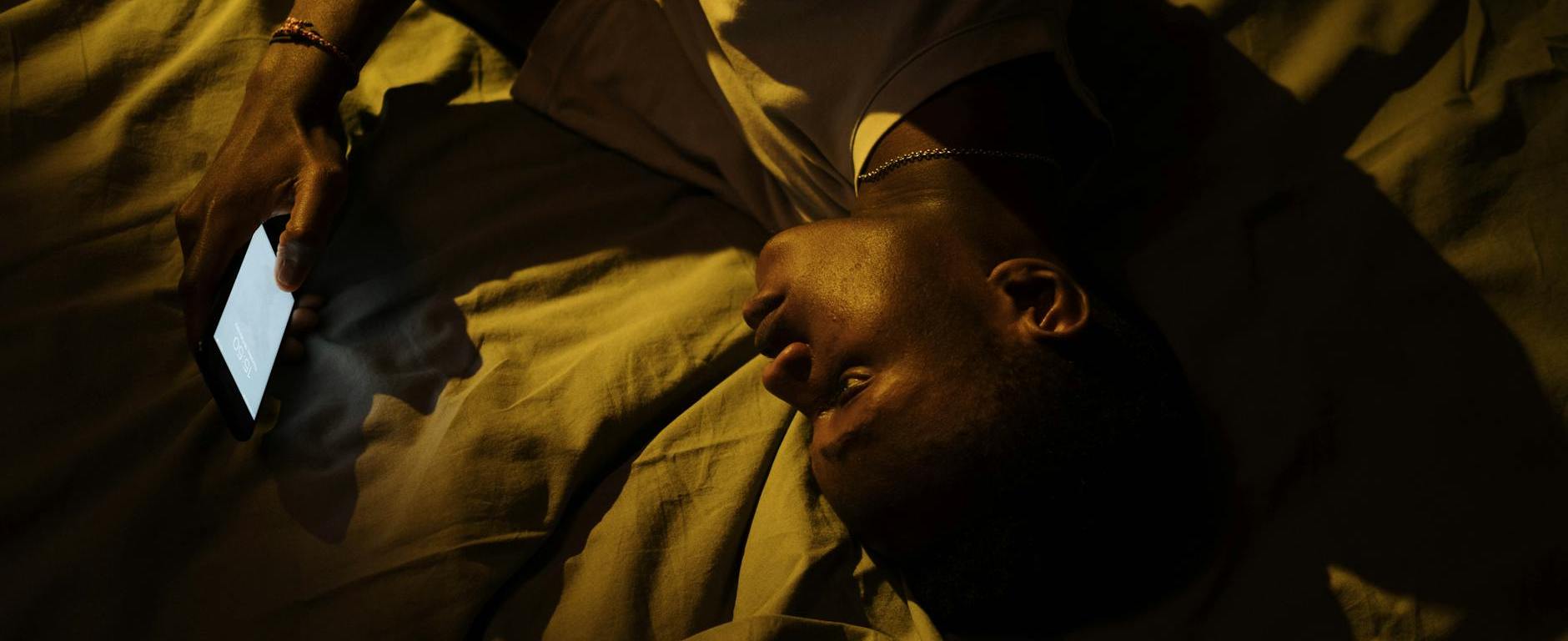
The odds aren’t stacked in the users’ favor, however. Despite the proven negative impact, promoting passive use remains a primary goal of social media companies because the feed is what makes them money—billions of dollars a year. The longer you scroll through your Facebook feed, the more ads you see and the more money Facebook makes. In 2020, a documentary titled The Social Dilemma pulled back the curtain on the algorithms which companies such as Facebook and Instagram employ to increase passive use. These algorithms, driven by machine learning, artificial intelligence, and vast quantities of user data, “feed” each user content tailored to keep them scrolling as long as possible. The success of these algorithms is apparent. It’s all too easy to lose an hour or two after checking a single notification, and the smartphone present in nearly every American pocket provides a constant source of temptation, leading to ongoing and increasingly irresistible social media addiction.
[T]he smartphone present in nearly every American pocket provides a constant source of temptation, leading to ongoing and increasingly irresistible social media addiction.
This addiction doesn’t just impact one individual through twenty minutes wasted on cat videos, it threatens the community as well. Human beings need social interaction, yet so-called ‘social’ media does not and cannot authentically fulfill that basic human need. Online interaction cannot provide authentic presence. A 2014 study in the Journal of Current Issues in Media and Telecommunications described the phenomenon whereby social media users create “social avatars”—idealized conceptions of themselves drawn from their perfect social-media lives. These social avatars undermine the user’s authentic self-image and make genuine online relationships with others impossible. Once you’ve created a social avatar, every real-world interaction becomes wrought with impostor syndrome, driving you back to social media, where it’s much easier to pretend. True authenticity, vulnerability, and connection are possible almost exclusively in active social media interactions that serve as an extension of physical presence. In group chats for families or friend-groups, for instance, it is past physical presence and the expectation of future physical presence that provides the authenticity online communication alone cannot. You didn’t get to know your siblings through Snapchat, you got to know them through the ups and downs of growing up together. You know their life isn’t perfect, and they know yours isn’t, so neither of you is going to create a “social avatar,” even if you communicate exclusively through social media over the semester. The same can’t be said for your peripheral Facebook friends, however, and it’s worth scrolling through your posts and considering how authentic your self-presentation actually is.
Once you’ve created a social avatar, every real-world interaction becomes wrought with impostor syndrome, driving you back to social media, where it’s much easier to pretend.
Even authentic online interactions, however, are no substitute for true physical community. A 2017 study in the journal Clinical Psychological Science confirms what many of us already know from our everyday lives: social media use aggressively supplants in-person social interaction. How many times have you walked through a restaurant or other public place unable to find even one group without someone on their smartphone, not even a couple on a date? How many times have you been in a conversation that was abruptly ended by a single notification? When social media is allowed to constantly intrude upon physical community, it disrupts authentic connections—the user, not fully present anywhere, becomes disconnected everywhere.
When social media is allowed to constantly intrude upon physical community, it disrupts authentic connections—the user, not fully present anywhere, becomes disconnected everywhere.
By supplanting authentic community, social media is threatening the entire political sphere by driving an ideological wedge deeper and deeper into America and dividing communities against themselves. A 2020 study published in the journal Computational Social Networks explains how social media algorithms create echo-chambers. Because of confirmation bias, posts that reinforce a user’s existing beliefs are more likely to keep them scrolling, so, in order to increase engagement time, the algorithm feeds each user more and more posts they will agree with. Furthermore, the impersonal nature of social media and the anonymity it provides encourage users to express their opinions with little to no consideration for their listeners. More radical posts, likewise, generate more replies, likes, and dislikes, which accordingly generate more traffic and make the social media platform more money. In the end, the incentive structure of social media platforms leads to the creation of echo-chambers occupied by increasingly radical and un-nuanced views.
The incentive structure of social media platforms leads to the creation of echo-chambers occupied by increasingly radical and un-nuanced views.
In a world where so many people go to social media for their news, these algorithm-fueled echo chambers cause greater and greater polarization as people from opposite points on the political spectrum increasingly view each other as unhinged and unreasonable. Worse yet, the polarization doesn’t stop with individuals. A 2022 study published in the journal Technological Forecasting and Social Change demonstrated that social media also increases the polarization of news and media organizations because columnists and reporters are themselves affected. Because of this, even those who don’t rely on social media for their news are still vulnerable to its polarizing influence. As increasingly polarized individuals are fed back through the polarizing social media system again and again, political division in America will only continue to increase.
Social media, in its predominantly passive usage, isolates individuals, supplants community, and subverts political society. Banning it outright, however, would be throwing out the baby with the bathwater. Social media used well can have powerful positive effects—crowdfunding, crowd sleuthing, evangelism outreach, and family reconnection are just a few examples. Any solution to the challenges I have presented, then, must also preserve these potential benefits, and that will require action at all three levels: individual, communal, and political. Here are my recommendations for action:
Social media, in its predominantly passive usage, isolates individuals, supplants community, and subverts political society.
First, we as individuals should protect ourselves. How? Isolate yourself from the addictive power of social media by avoiding algorithm-driven feeds on platforms such as Instagram, Facebook, and YouTube. Only watch a video or look at a post if you sought it out directly, not if an algorithm recommended it to you. Furthermore, cultivate the beneficial aspects of social media by using it only to actively communicate with family and close friends. Avoid endless distraction from keeping up with hundreds of superficial acquaintances.
Second, we must all work to preserve authentic community. Use social media to extend real community by only participating in group-chats that help facilitate genuine relationships with people you have seen or will see in person. Remember that if all you know of the people you’re talking to comes from social media, then both of you are likely presenting idealized conceptions of yourselves—not exactly the authenticity that makes deeper relationships meaningful. Most of all, however, prioritize authentic, physical interactions here and now over texting of any sort. I implore you not to be the person who immediately withdraws from an in-person conversation to answer a text or look at a notification. Please also consider employing mild social chastisement to curtail this behavior in others.
I implore you not to be the person who immediately withdraws from an in-person conversation to answer a text or look at a notification. Please also consider employing mild social chastisement to curtail this behavior in others.
Finally, we and our leaders must safeguard the political order. Strive to be accurately informed. Develop a balanced portfolio of news sources and prioritize primary sources over synopses and opinions by columnists and pundits, especially the ones you agree with. In terms of public policy, I will go out on a limb and offer one general proposal: social media algorithms could be regulated (a dangerous word to use at Hillsdale, I know) to prevent selective political promotion and the echo-chambers that result. Instead, posts of all political persuasions should be given equal promotion to each user.
These steps are by no means perfect solutions to the dangers of social media, nor are they the only ones. I do believe, however, that these principles, guiding our actions, can go a long way toward curtailing the harms I’ve presented. I’ll leave you with a final story to consider, one that took place only 15 years ago, but in some ways already sounds like it’s from a different world. In 2009, a record-breaking flood threatened to destroy my hometown of Fargo, North Dakota. The people of Fargo united to save the city, brought together not by social media, but by common geographical necessity—their lives and livelihoods were all connected by the same physical community. When the flood threatened to destroy it all, political leaders set aside partisan feelings and united to guide the mitigation effort. When many people’s homes or businesses were threatened or destroyed, the community came together in personal, physical ways to assist them. When the fate of the city depended on dikes and levees, thousands of individuals volunteered to fill and stack sandbags. These actions ultimately saved Fargo, but now, much of what made that victory possible is threatened by social media. Could Fargo’s flood fight have been won if its citizens were isolated by social media addiction, if its physical communities were supplanted by online acquaintances, if its leaders were bitterly polarized by algorithm-fueled echo-chambers? Perhaps this example is too dramatic, but there’s no doubt the individual, communal, and political impacts of social media may, and have, had far reaching effects. Even if Congress is boldly protecting us from the CCP, we’d better do something about the other harms of social media; if you live near a river, your basement might depend on it.
Jacob Schulz is a Junior majoring in Politics and minoring in Greek.
 Hillsdale Forum